
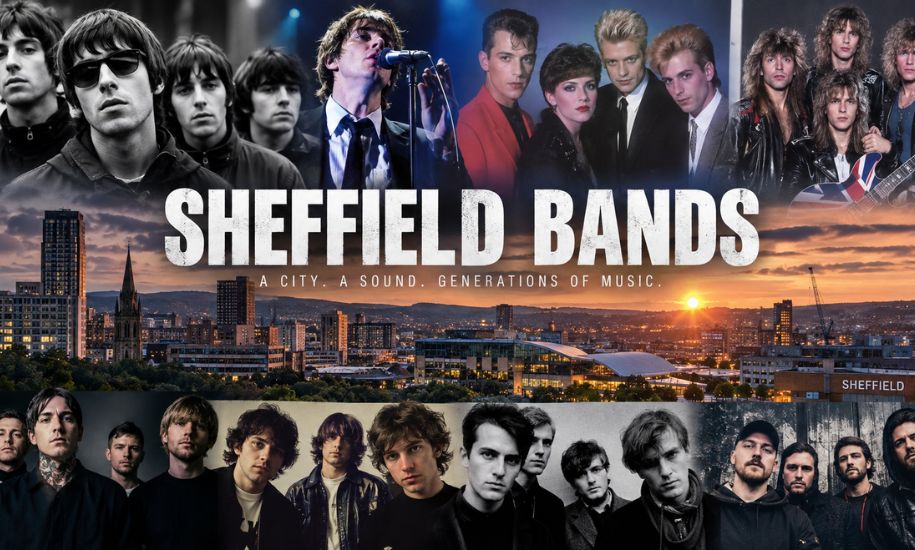
Sheffield has a special place in British music history. Known internationally for its steel industry and distinctive northern character, the South Yorkshire city has also produced influential musicians and bands across several generations. From pioneering electronic groups of the 1970s and 1980s to Britpop, indie rock and modern metal, Sheffield bands have repeatedly introduced new sounds to British and international audiences. The city’s musical identity is particularly associated with experimentation, strong songwriting and a close connection between music and everyday urban life.
Quick Bio Table: Sheffield Bands
| Detail | Information |
|---|---|
| Subject | Sheffield bands |
| Location | Sheffield, South Yorkshire, England |
| Country | United Kingdom |
| Major genres | Electronic, synth-pop, rock, indie, Britpop, metal |
| Important era | 1970s to present |
| Famous 1980s acts | The Human League, Heaven 17, ABC, Cabaret Voltaire |
| Famous rock acts | Def Leppard, Bring Me the Horizon |
| Famous indie acts | Pulp, Arctic Monkeys, The Long Blondes, Milburn |
| Musical reputation | Electronic innovation, indie rock and alternative music |
| Major modern name | Arctic Monkeys |
What Is Sheffield Bands?
The phrase “What is Sheffield bands” generally refers to musical groups that were formed in Sheffield or have strong connections with the city. It does not describe one particular musical genre. Instead, Sheffield bands represent a wide variety of styles, including electronic music, synth-pop, new wave, rock, indie, Britpop, alternative music and heavy metal.
What makes Sheffield particularly interesting is the way its music scene has changed over time. In the late 1970s and 1980s, musicians from the city became pioneers of electronic and experimental music. During the 1990s, Pulp became closely associated with Britpop and alternative pop. In the 2000s, Arctic Monkeys helped establish Sheffield as a major centre of British indie rock.
The city’s music culture therefore cannot be reduced to a single sound. Instead, Sheffield bands represent several generations of musicians who have continually reinvented the city’s musical reputation.
The Origins of Sheffield’s Music Scene
Sheffield’s industrial background played an important role in shaping its musical culture. The city was internationally known for steel manufacturing, engineering and factories, creating a distinctive urban environment. For some musicians, this industrial atmosphere became an inspiration for unconventional and experimental sounds.
During the 1970s, young musicians began exploring synthesizers, tape machines, electronic equipment and alternative approaches to songwriting. Rather than following traditional guitar-based rock formulas, some Sheffield artists wanted to create something completely different.
This experimentation eventually helped establish Sheffield as one of Britain’s important electronic-music centres.
Famous Sheffield Bands
There are many groups associated with the city, but several names stand out because of their influence and international success.
The Human League
The Human League is one of the most important names in the history of famous Sheffield bands. Formed in Sheffield in 1977, the group initially explored experimental electronic music before developing the polished synth-pop sound that made them internationally successful.
Their breakthrough demonstrated that synthesizers could become central to mainstream pop music. Songs such as “Don’t You Want Me” helped make the group one of the defining British acts of the early 1980s.
The Human League’s success also helped establish Sheffield as a city capable of producing innovative electronic music with international appeal.
Cabaret Voltaire
Cabaret Voltaire represents the more experimental side of Sheffield’s musical history. Formed in the 1970s, the group became associated with industrial, electronic and avant-garde music.
Their approach was very different from conventional pop and rock. They experimented with electronic sounds, samples and unconventional production techniques, influencing later generations of electronic and alternative musicians.
For anyone researching Sheffield bands, Cabaret Voltaire is important because the group helped establish the city’s reputation for musical experimentation.
ABC
ABC became one of the most recognizable Sheffield pop groups of the early 1980s. Led by Martin Fry, the band combined sophisticated pop songwriting with electronic production and stylish presentation.
Their album The Lexicon of Love became a landmark release, and the group’s success showed another side of Sheffield’s musical creativity. While some local groups concentrated on experimental sounds, ABC demonstrated how Sheffield musicians could turn electronic influences into sophisticated mainstream pop.
Heaven 17
Heaven 17 emerged from the same electronic environment that produced The Human League. Martyn Ware and Ian Craig Marsh, former members of the Human League, went on to form Heaven 17 with vocalist Glenn Gregory.
The group became an important part of Sheffield’s 1980s synth-pop identity. Their music combined electronic instrumentation with socially conscious themes and memorable pop melodies.
Sheffield Bands 80s: The Electronic Revolution
The search for “Sheffield bands 80s” often leads to one of the most fascinating periods in the city’s musical history.
The decade was dominated by electronic experimentation and synth-pop. The Human League, Heaven 17, ABC and Cabaret Voltaire became especially important names. Other Sheffield-associated acts also contributed to the city’s alternative and electronic reputation.
The development of affordable synthesizers and recording technology allowed musicians to experiment without relying entirely on traditional rock instrumentation. Sheffield’s industrial atmosphere gave these sounds a distinctive character.
The 1980s also demonstrated that music from outside London could become internationally successful. Sheffield’s artists proved that a northern industrial city could become a major source of innovation in British popular music.
Def Leppard and Sheffield Rock
Sheffield’s musical heritage is not limited to electronic music. Def Leppard became one of the city’s greatest rock exports.
Formed in Sheffield in the late 1970s, Def Leppard eventually became internationally successful through their combination of hard rock, heavy metal and melodic songwriting. Their global career introduced millions of listeners to another dimension of Sheffield music.
Their story is particularly significant because it shows how diverse the city’s musical output has been. While electronic artists were experimenting with synthesizers, Sheffield musicians were simultaneously making their mark in rock and heavy metal.
Pulp and the Britpop Generation
When discussing Sheffield’s musical history, Pulp is impossible to overlook. Led by Jarvis Cocker, the band became one of the most recognizable groups of the 1990s Britpop era.
Pulp’s music was characterized by observational lyrics, distinctive arrangements and stories about relationships, class, ambition and ordinary British life. Their connection with Sheffield gave the band an especially strong sense of place.
The band’s rise demonstrated that Sheffield could once again produce music that captured the attention of the entire country. Pulp also helped create a bridge between the city’s earlier alternative scene and the larger indie culture that followed.
Arctic Monkeys and a New Generation
The arrival of Arctic Monkeys in the 2000s created another defining chapter in Sheffield’s musical story.
Formed in the city, Arctic Monkeys developed from the local live scene into one of Britain’s most successful rock bands. Their early songs captured the energy of young people, nightlife and everyday experiences, while their rapid rise became one of the most discussed success stories of the British indie era.
The band’s popularity also increased international interest in Sheffield’s music culture. Other local groups, including Milburn, Little Man Tate and Reverend and the Makers, became associated with the city’s vibrant 2000s indie scene.
Arctic Monkeys subsequently evolved musically, moving beyond their early indie-rock sound and exploring psychedelic rock, lounge-inspired arrangements and more experimental songwriting.
Sheffield Bands Now
The phrase “Sheffield bands now” reflects a music scene that remains much more diverse than its famous historical reputation might suggest.
Modern Sheffield continues to produce musicians working in rock, metal, alternative, electronic and indie music. Bring Me the Horizon is one of the most internationally prominent modern bands associated with the city. Their evolution from metalcore toward a broader mixture of rock, electronic music and experimental styles demonstrates the continuing willingness of Sheffield musicians to change direction.
While She Sleeps has also become an important Sheffield name in modern heavy music. Meanwhile, artists and groups connected with alternative, indie and electronic scenes continue to emerge from the city.
The contemporary scene therefore maintains an important Sheffield tradition: musical diversity combined with experimentation.
The Long Blondes and Sheffield Indie Music
The Long Blondes became notable during the 2000s indie revival. Their music combined post-punk influences with energetic guitar arrangements and distinctive vocals.
They were part of a wider movement that drew attention to Yorkshire’s music scene. Their emergence demonstrated that Sheffield’s musical culture was still capable of producing distinctive indie groups after the international success of Pulp and before and alongside Arctic Monkeys’ global rise.
Why Are Sheffield Bands So Influential?
One reason for Sheffield’s musical influence is its willingness to embrace different styles. The city has produced electronic pioneers, mainstream pop groups, hard-rock performers, Britpop stars and modern metal bands.
Another factor is the city’s strong grassroots culture. Local venues have historically provided opportunities for new performers to develop their sound and build audiences.
There is also a strong sense of identity. Many Sheffield musicians have drawn inspiration from the city’s streets, people, industrial heritage and northern culture. That local character has often made their music feel different from more conventional mainstream productions.
Sheffield’s influence also extends beyond individual bands. The city became associated with electronic innovation, independent music and alternative culture, helping inspire musicians far beyond South Yorkshire.
The Lasting Legacy of Sheffield Bands
The history of Sheffield bands is essentially a story of constant musical reinvention. The electronic pioneers of the 1970s and 1980s established the city as a centre of innovation. Pulp carried Sheffield’s identity into the Britpop era, while Arctic Monkeys introduced a new generation to the city’s indie-rock tradition. Def Leppard demonstrated Sheffield’s ability to produce globally successful rock music, while Bring Me the Horizon and While She Sleeps have continued the city’s influence in modern heavy music.
From synthesizers and experimental electronics to guitar-driven indie and contemporary metal, Sheffield has repeatedly produced artists willing to challenge expectations. This mixture of creativity, local identity and musical experimentation explains why the city remains one of Britain’s most interesting music centres.
For readers exploring the story of British music, Globe Gist offers an ideal place to discover more cultural stories, musicians, bands and influential figures from different generations.
You may also read: How Browsers and Phones Quietly Took Over Digital Entertainment


One Comment