Walter Lippmann: Theory, Books, Public Opinion & Political Views Explained

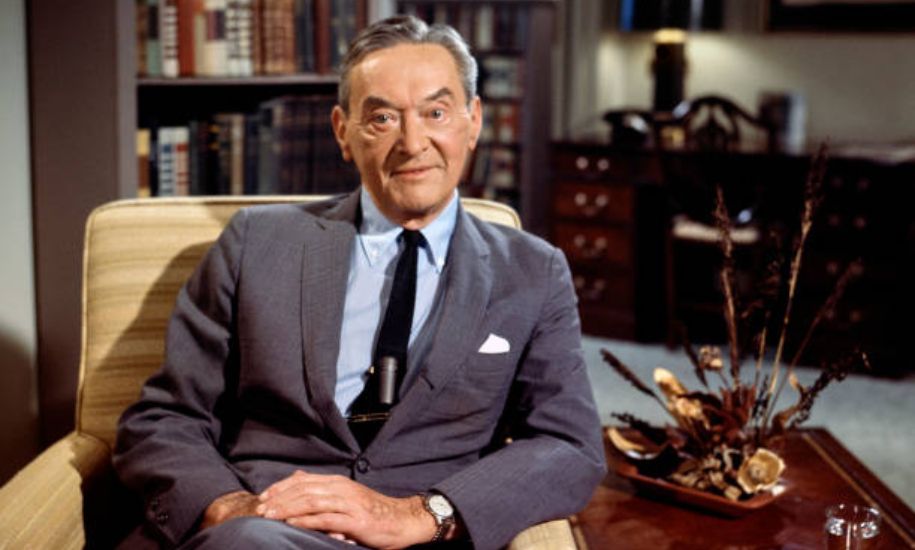
Walter Lippmann stands as one of the most influential thinkers in modern journalism, political theory, and media studies. Often cited in discussions about democracy, propaganda, and the power of mass communication, Lippmann’s ideas remain highly relevant in today’s digital age. For anyone searching “Who is Walter Lippmann” or exploring “Walter Lippmann theory”, his work provides a deep understanding of how public opinion is shaped and controlled.
He was not just a journalist but a sharp critic of democracy and a pioneer in analyzing how media influences society. His landmark book Public Opinion continues to be widely studied and referenced across academic and professional fields.
Quick Bio Table
| Field | Details |
|---|---|
| Full Name | Walter Lippmann |
| Date of Birth | September 23, 1889 |
| Place of Birth | New York City, USA |
| Date of Death | December 14, 1974 |
| Age at Death | 85 years |
| Profession | Journalist, Author, Political Commentator |
| Famous Work | Public Opinion (1922) |
| Key Concepts | Stereotypes, Pseudo-environment, Media Influence |
| Awards | 2 Pulitzer Prizes |
| Nationality | American |
Who is Walter Lippmann?
Walter Lippmann was a highly respected American intellectual known for shaping modern journalism and political communication. If you search “Walter Lippmann Wikipedia”, you’ll find that he was not only a writer but also a philosopher of democracy.
He worked as a columnist, author, and advisor to political leaders, influencing public discourse for decades. His writings examined how ordinary people understand the world and how media plays a crucial role in forming those perceptions.
Lippmann believed that modern society had become too complex for individuals to fully comprehend. As a result, people rely heavily on simplified representations of reality, often created by the media.
Walter Lippmann Books
Walter Lippmann authored several important books that contributed to political thought and media theory. These works are still widely studied today.
1. Public Opinion (1922)
This is Lippmann’s most famous and influential book. It explores how public opinion is formed and how it is often disconnected from reality. The book introduces key ideas such as stereotypes and the pseudo-environment.
2. The Phantom Public (1925)
In this book, Lippmann argues that the idea of an active and informed public is largely an illusion. He suggests that most people are not equipped to engage deeply in political decision-making.
3. The Good Society (1937)
This work focuses on political philosophy and critiques economic and political systems of the time.
4. The Public Philosophy (1955)
Here, Lippmann examines the moral foundations of democracy and governance.
These books collectively shaped discussions around governance, media, and public behavior.
Walter Lippmann Theory
One of the main reasons Lippmann is still relevant today is his groundbreaking theory about how people perceive reality.
1. Pseudo-Environment
Lippmann argued that individuals do not interact directly with the real world. Instead, they interact with a “pseudo-environment” — a mental image of the world shaped largely by media.
This idea explains why people can have strong opinions about events they have never experienced firsthand.
2. Stereotypes
Lippmann popularized the modern use of the term “stereotype.” He described it as a mental shortcut that helps people simplify complex realities.
While stereotypes make life easier, they can also lead to misunderstanding and bias.
3. Manufacture of Consent
Lippmann believed that public opinion could be shaped or “manufactured” by those in power, including governments and media institutions.
This concept has become central to discussions about propaganda and media influence.
4. Limits of Public Knowledge
He argued that the average person lacks the time and resources to fully understand political issues. Therefore, public opinion is often based on incomplete or misleading information.
Walter Lippmann Political Views
Walter Lippmann had a complex and sometimes controversial perspective on democracy.
Elite Governance
He believed that decision-making should be guided by experts and informed elites rather than the general public. This idea is often referred to as “elite democracy” or “technocracy.”
Criticism of Mass Democracy
Lippmann was skeptical about the ability of ordinary citizens to make informed political decisions. He argued that democracy suffers when people rely on limited or distorted information.
Realist Approach
Although he supported democratic ideals, Lippmann emphasized practical limitations. He believed democracy needed to be structured in a way that compensates for human cognitive limitations.
His views sparked debates that continue in modern political theory.
Walter Lippmann and Public Opinion
The phrase “Walter Lippmann Public Opinion” is closely associated with his most important contribution to political and media studies.
In Public Opinion, Lippmann explains that:
- The world is too complex for individuals to fully understand
- People rely on simplified images or narratives
- Media plays a powerful role in shaping these narratives
He introduced the idea that people form opinions not based on reality, but based on how reality is presented to them.
This insight has become especially important in today’s era of social media, misinformation, and digital news.
Walter Lippmann Quotes
Walter Lippmann’s quotes reflect his deep understanding of society, media, and human behavior.
Here are some of his most notable quotes:
- “We are told about the world before we see it.”
- “Democracy is much too important to be left to public opinion.”
- “Where all think alike, no one thinks very much.”
- “The public must be put in its place.”
- “A great man is no more than a great child.”
These quotes highlight his skepticism about mass opinion and his belief in the power of information control.
Walter Lippmann Died
Walter Lippmann died on December 14, 1974, at the age of 85. His death marked the end of an era in journalism and political commentary.
However, his ideas did not fade. In fact, they have become even more relevant with the rise of digital media, fake news, and global communication networks.
Legacy and Modern Relevance
Walter Lippmann’s work continues to influence:
- Media studies
- Political science
- Communication theory
- Journalism ethics
In today’s world, where information spreads rapidly and often inaccurately, Lippmann’s insights help explain:
- Why misinformation spreads
- How public opinion is shaped online
- The role of media in influencing democracy
His concept of the pseudo-environment is especially relevant in the age of social media, where people often interact with curated realities rather than actual events.
Conclusion
Walter Lippmann was far more than a journalist—he was a visionary thinker who fundamentally changed how we understand media, democracy, and public opinion. His theories continue to provide valuable insights into how societies function and how individuals perceive reality.
From his influential book Public Opinion to his critical views on democracy, Lippmann’s work remains essential reading for anyone interested in politics, media, or human behavior.
This article by Globe Gist aims to present a comprehensive overview of his life, ideas, and lasting impact.
You may also read: Garry Trudeau Biography: Doonesbury, Net Worth, Family & Life