A few years ago, whenever I wanted to build an anime-style character, I usually had two choices. I could draw it myself, which took time, patience, and a lot of trial and error. Or I could commission an artist, which was better for polished work but not always practical when I was only testing an early idea.
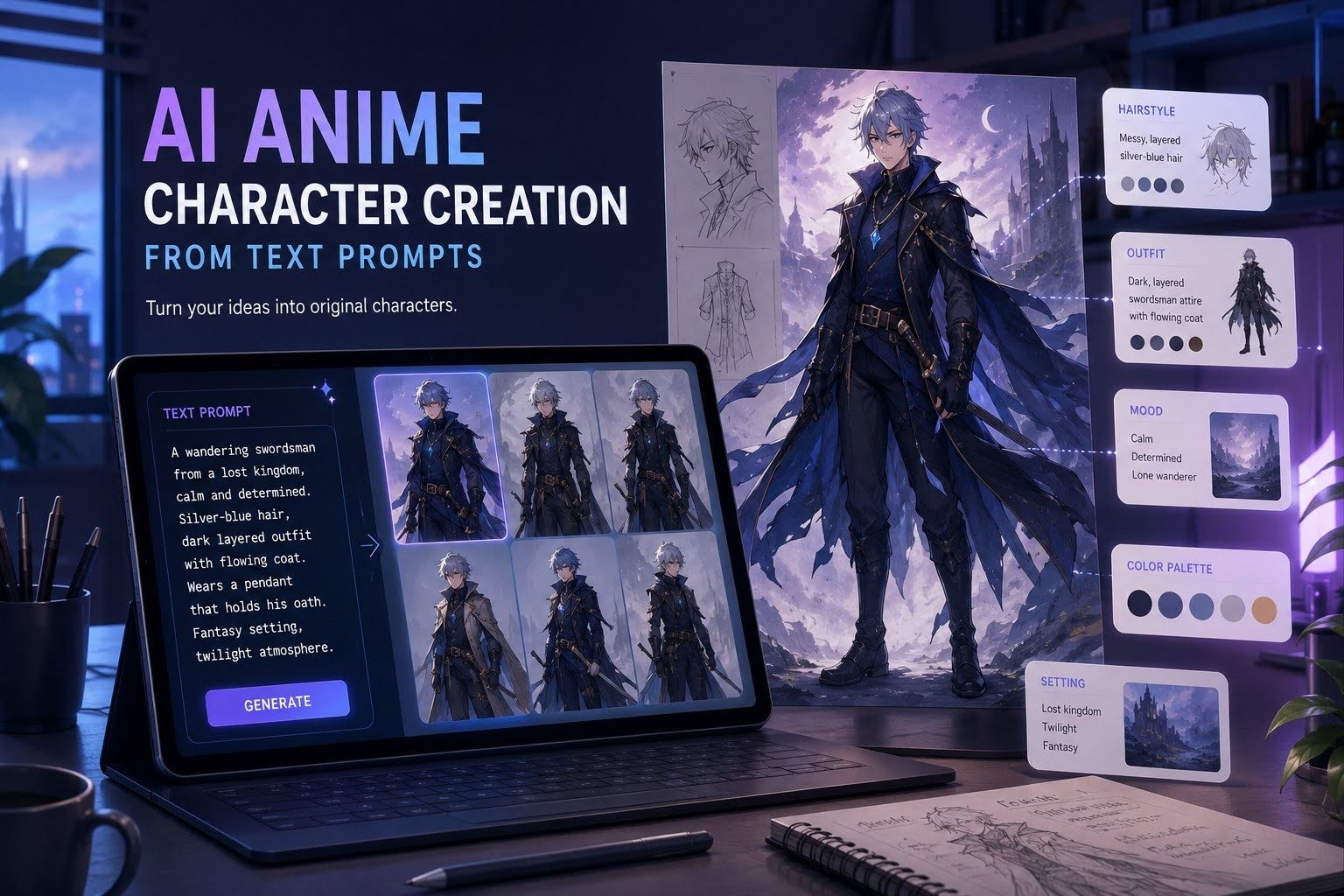
That is why I started paying closer attention to AI-assisted character tools. For creators who begin with a written idea rather than a finished sketch, an AI anime art generator from text can make the early stage much easier. It does not remove the need for taste or creative direction, but it does help turn a loose character concept into something visible.
I noticed this most clearly when working with original character ideas. A line like “a quiet forest mage with silver hair and a tired expression” is not enough for a full design, but it is enough to begin exploring a visual direction. Once I can see a few versions, I can judge what feels right and what feels generic.
From Text Prompts to Visual Anime Concepts
The biggest advantage of text-to-anime tools is not speed alone. Speed matters, of course, but the real value is iteration. I can try several character directions before committing to one.
When I write a prompt, I usually think about five things:
| Prompt Element | Why It Matters | Example |
| Character role | Gives the image a clear base | wandering knight, school idol, cyberpunk healer |
| Personality | Shapes expression and pose | shy, arrogant, calm, playful |
| Visual traits | Makes the design recognizable | silver hair, red eyes, short jacket |
| Outfit | Connects the character to a world | fantasy armor, school uniform, streetwear |
| Mood | Helps the image feel less flat | lonely, bright, mysterious, heroic |
The mistake I made early on was writing prompts that only described beauty. Words like “beautiful anime girl” or “cool anime boy” usually produced something polished but forgettable. The results improved when I described purpose. A character who guards an abandoned shrine feels more specific than a character who is simply “cute.”
Why Original Characters Matter Online
Original characters have become part of online identity. People use them as profile images, story mascots, comic characters, roleplay personas, VTuber-style concepts, and even brand visuals. An OC is not just a drawing. It can become a small creative universe.
I have seen this especially in anime communities, writing groups, and indie game circles. A creator may start with one character image, but soon they need expressions, outfits, profile descriptions, relationship charts, and story scenes. The first image becomes a reference point for everything that follows.
That is why a good OC needs more than style. It needs a readable identity. If someone only remembers the hair color, the design is probably not strong enough yet.
Using an Anime OC Creator After the First Image
Once the first visual direction feels promising, I usually move from image testing into character building. This is where an anime OC creator becomes more useful than a simple one-time image generator.
The difference is small but important. An anime art generator helps me see the character. An OC creator helps me think about the character as a reusable idea. I can explore different themes, personalities, and visual variations without treating each output as a completely separate project.
For example, if I am building a fantasy archer, I may test:
- a younger academy version
- a battle-ready version
- a winter outfit
- a relaxed portrait
- a darker alternate timeline design
This kind of variation helps me understand whether the character has enough structure to survive beyond one pretty image.
Common Use Cases for AI Anime Character Tools
The strongest use cases I have seen are not about replacing professional artists. They are about early-stage creative exploration.
Writers can use AI character visuals to clarify descriptions. Comic creators can test cast designs before drawing panels. Roleplay users can build profile images. Small creators can create mascot drafts. Game storytellers can explore NPC concepts before investing in final art.
The tool works best when the creator already has a direction. If the prompt is empty, the output will feel empty too. If the idea has a role, mood, and conflict, the result usually becomes much more useful.
What Creators Should Still Review Manually
I would not publish AI-generated character art without review. Small details can still look strange. Hands, accessories, clothing logic, and background objects often need checking. Text inside images is also unreliable, so I usually add final labels or captions manually.
There is also the question of originality. A responsible creator should avoid asking for direct copies of existing anime characters. The better approach is to describe broad influences, moods, and design goals without cloning someone else’s IP.
AI can help with the draft, but the final creative judgment still belongs to the person using it.
Practical Tips for Better Anime Character Results
The best results usually come from prompts that are specific but not overloaded. I try to keep one clear identity at the center of the prompt.
For example, instead of writing:
“anime girl, pretty, fantasy, magic, detailed outfit, beautiful background”
I would write:
“original anime character, young forest mage, quiet personality, green cloak, silver hair, wooden staff, soft moonlight, calm expression, fantasy village background”
The second version gives the tool a stronger creative path. It also gives me a better way to judge whether the output matches the character I had in mind.
Final Thoughts
AI anime generators have changed how I approach early character creation. I no longer need to wait until every detail is perfect before seeing a rough visual direction. That makes experimentation easier.
Still, the tool is only the starting point. A memorable OC needs personality, conflict, visual consistency, and a reason to exist. The strongest results happen when AI speeds up the sketching process, while the creator stays in control of the story behind the image.