Vue.js Architecture: Designing Scalable and Maintainable Frontend Applications

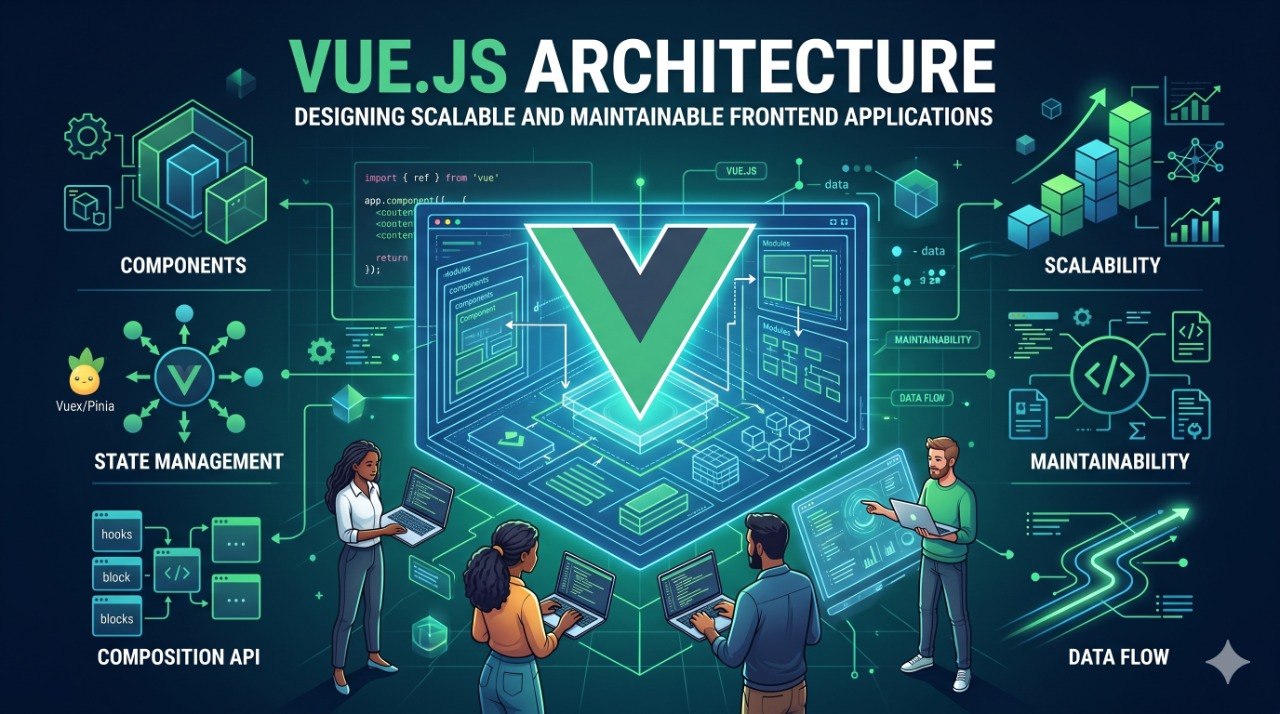
Modern frontend development is no longer just about creating interfaces. It is about shaping systems that stay scalable, easy to manage, and adaptable over time. As applications grow in complexity, how they are organized becomes just as important as the features they include. A clear architecture helps the teams to handle state, organize components, and keep consistency throughout the application lifecycle. This is where Vue.js Architecture plays an important role in curating how modern web applications are created and scaled efficiently. Understanding Vue.js Architecture helps development teams to create applications that are easier to manage and expand and better without adding unnecessary complexity.
Why Architecture Matters in Vue-Based Applications
As applications evolve, poor structure often leads to performance bottlenecks and maintenance challenges. A clear architectural approach assures that components are modular, reusable, and logically separated. This reduces dependency issues and allows teams to work on different parts of the application without conflicts. Teams working with vue js application development services often emphasize structured component design, centralized state handling, and predictable data flow to maintain long-term stability. This approach improves development speed and lowers the risk of technical debt.
Core Building Blocks of Vue.js Architecture
At its core, Vue is based on a component driven approach that helps developers split interfaces into smaller, manageable units.
Component-Based Design
Each part of the interface is treated as an independent component, making it easier to reuse and maintain.
Reactive Data Binding
Vue’s reactivity system updates the UI automatically when data changes, reducing the need for manual updates.
State Management
For larger applications, centralized state management ensures consistent data flow across components.
These elements form the base of Vue.js Architecture, helping developers create scalable and predictable systems.
Structuring Applications for Scalability
Scalability depends on how well an application can grow without becoming difficult to manage.
Arranging components into logical directories, separating business logic from UI layers, and maintaining consistent naming conventions are key practices.
Using patterns such as modular architecture helps teams extend functionality without affecting existing features.
Organizations that pair organized frontend systems with nuxt js application development services often see improved scalability, especially when handling server rendered or hybrid applications.
Managing State and Data Flow Efficiently
As applications grow, managing data across multiple components becomes more complex.
Centralized state management keeps data consistent and reduces duplicated logic. This means updates in one part of the application appear correctly across the system.
Clear data flow also improves debugging and testing, making it easier to find issues and implement fixes without affecting other modules.
A well-planned data strategy is essential for maintaining stability in large-scale applications.
Performance Optimization Through Architectural Decisions
Performance is closely tied to how an application is structured.
Efficient component rendering, lazy loading, and code splitting are all influenced by architectural choices. By organizing components effectively, developers can reduce unnecessary re-renders and improve load times.
Applications built with scalable architecture patterns often perform better under high traffic conditions and provide a smoother user experience.
Using these practices along with progressive web app development company strategies further improves performance and accessibility.
Vue.js Architecture vs Traditional Frontend Structures
Traditional frontend approaches often rely on tightly coupled components and scattered data handling, which can lead to maintenance challenges.In contrast, Vue promotes a more structured and modular approach. Components are loosely coupled, and data flow is predictable, making the system easier to scale and maintain.This difference becomes more noticeable as applications grow, where structured architecture significantly reduces complexity.
When to Focus on Strong Architectural Planning
Not every project requires a highly complex structure, but certain scenarios benefit greatly from strong architectural planning:
- Large-scale web applications
- Applications with multiple teams
- Long-term product development
- Platforms requiring frequent updates
In these cases, a solid Vue.js Architecture helps with long term efficiency and smoother management.
Common Challenges in Vue Application Architecture
While Vue simplifies many aspects of development, architectural challenges can still arise.
Over-Componentization
Breaking the application into too many small components can increase complexity.
State Mismanagement
Improper handling of shared data can lead to inconsistencies.
Lack of Standardization
Without clear guidelines, teams may follow different patterns, reducing overall consistency.
Addressing these challenges early helps maintain a clean and scalable structure.
The Future of Vue.js Architecture
Frontend architecture continues to evolve with the introduction of new tools and patterns.
Modern Vue ecosystems are increasingly adopting hybrid rendering, improved state management techniques, and better integration with backend systems.
As applications become more dynamic, Vue.js Architecture will keep adapting, offering adaptable ways to create scalable and high performance interfaces.
Conclusion
Creating scalable frontend applications is not just about choosing the right framework. It also comes down to how the architecture is set up. With modular design, clear state management, and performance improvements, systems stay stable as they grow. For teams aiming to provide consistent user experiences, Vue.js Architecture offers a solid base that keeps applications easier to manage over time.