Reference to Video: 5 Best Tools to Turn Uploaded Images into Dynamic Videos

Creating videos from static visuals is becoming a core workflow in modern content production. The rise of reference to video tools allows creators to upload images and generate dynamic, motion-rich videos with minimal effort. These tools are especially useful for marketers, educators, and social media creators who want to maintain visual consistency while producing scalable content.
This guide explores five of the most effective platforms that specialize in converting reference images into videos. Each tool offers a unique approach to motion generation, scene continuity, and storytelling. The focus remains on usability, flexibility, and practical application rather than hype.
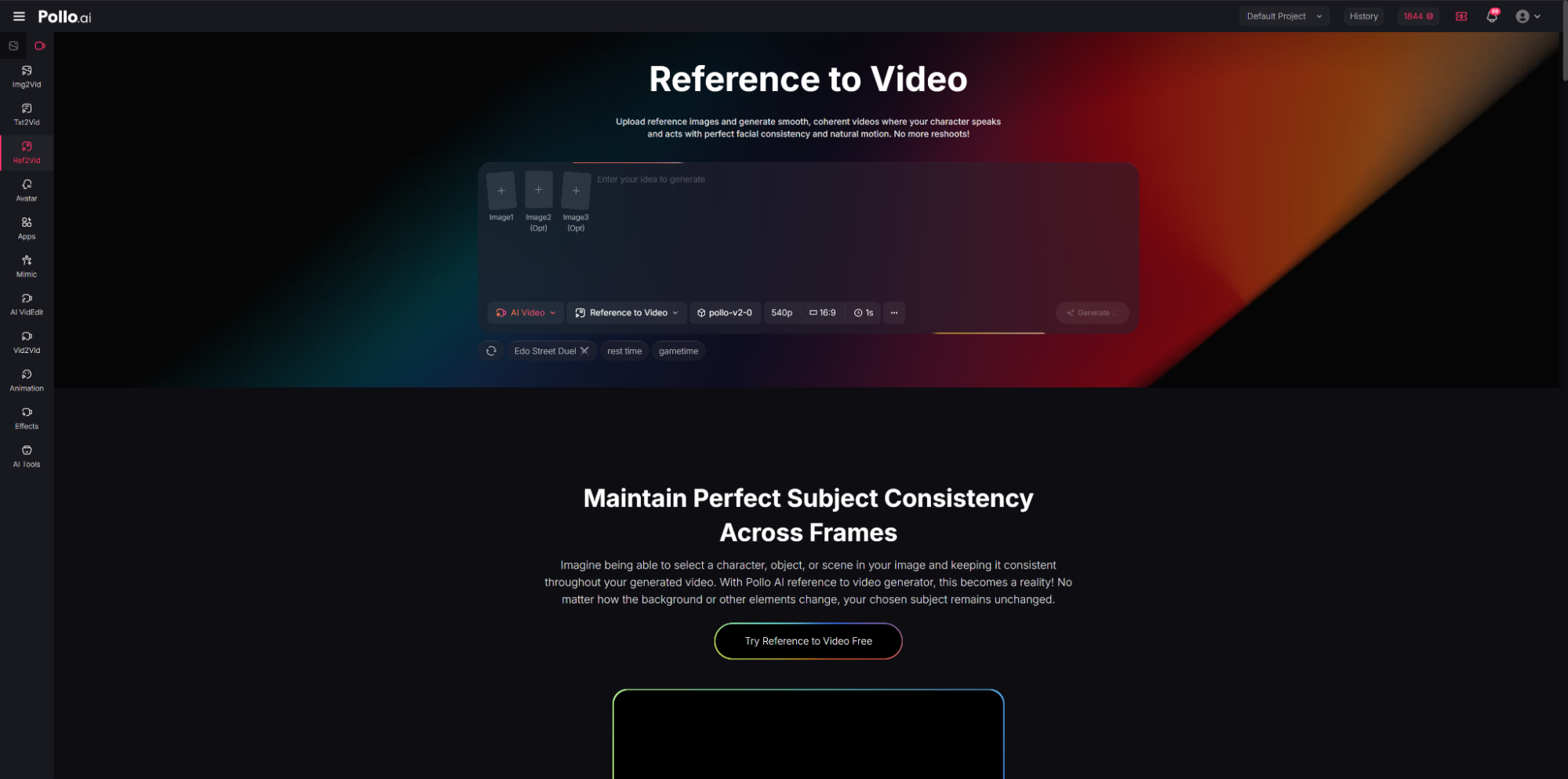
1. Pollo AI – Best Overall Reference to Video Platform for Structured Visual Storytelling
Pollo AI stands out as a highly adaptable reference to video tool designed for users who want structured and visually consistent outputs. It allows creators to upload reference images and transform them into multi-scene videos with smooth transitions and coherent narratives. The platform focuses on maintaining character consistency and visual identity, which is often a challenge in AI-generated video workflows.
Another key strength lies in its ability to interpret image context rather than simply animate it. This means users can build story-driven videos instead of isolated clips. Whether working with a single image or a sequence of references, Pollo AI ensures continuity across frames, making it suitable for both short-form and longer narrative content.
Why Pollo AI is Recommended
Pollo AI offers a balanced combination of control and automation. It supports both simple prompts and more complex multi-scene instructions, allowing users to scale their creative output without losing quality. The interface is intuitive, reducing the learning curve for beginners while still offering depth for advanced users.
It also supports diverse content styles, from educational storytelling to branded visuals. This flexibility makes it relevant across industries, including marketing, content creation, and e-learning.
Best Use Cases
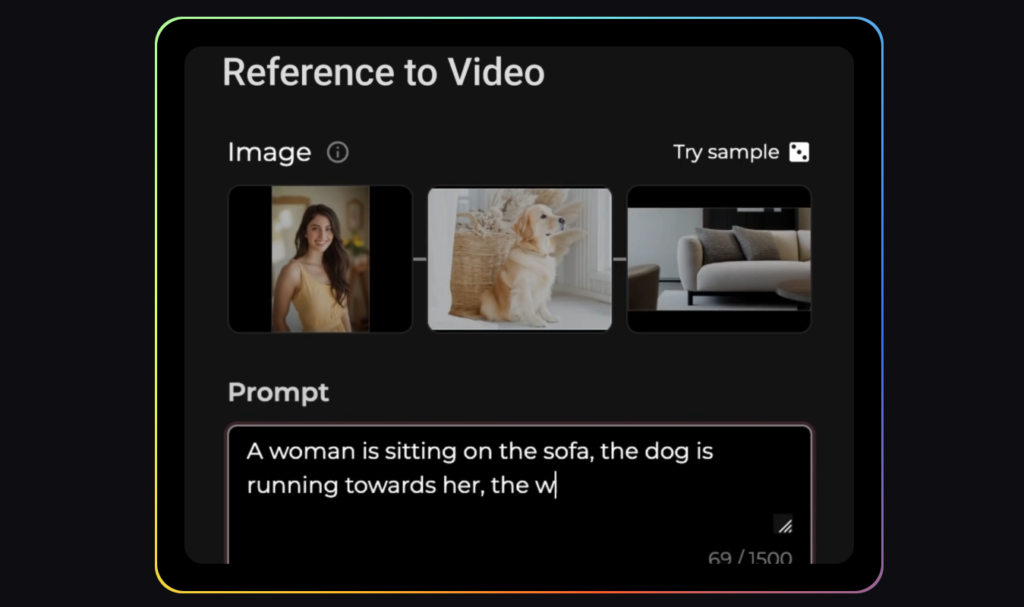
Pollo AI is well-suited for generating character-driven videos from reference images while maintaining consistent visual identity across scenes. It can also function as a boomerang video maker by creating short looping clips with smooth, natural motion for social media engagement. Additionally, it enables creators to remix multiple images into a single cohesive video, stitching together moments into a fluid narrative with seamless transitions.
It is also effective for introducing new characters or objects into existing scenes while preserving environmental consistency, which is useful for creative storytelling and product placement. Another key use case includes generating new contexts for the same subject—such as placing a character or product in different environments—while keeping the main subject visually unchanged across frames.
2. Kling AI – Advanced Reference to Video Tool for Realistic Motion Generation
Kling AI focuses on realism and cinematic motion, making it a powerful option in the reference to video category. It allows users to upload images and generate videos that emphasize natural movement, lighting consistency, and spatial depth. This makes the output feel closer to traditional video production rather than purely AI-generated animation.
The platform is particularly effective when working with high-quality reference images. It can interpret subtle visual cues and translate them into lifelike motion, which is valuable for creators aiming for professional-grade results.
Why Kling AI is Recommended
Kling AI is recommended for users who prioritize realism over stylization. Its rendering engine produces smoother motion and more accurate physics compared to many alternatives. This makes it suitable for projects that require a polished, cinematic look.
Another advantage is its ability to handle complex scenes. Users can upload detailed reference images and expect the system to maintain depth and perspective during animation.
Best Use Cases
Kling AI works well for producing cinematic clips from high-resolution reference images with realistic lighting and depth. It can also be used to create product showcase videos that simulate real-world motion and camera movement.
Additionally, it is suitable for storytelling scenarios that require natural character motion and immersive environments, as well as generating visually consistent sequences for professional marketing or film-style content.
3. Vidu – Efficient Reference to Video Generator for Fast Content Creation
Vidu is designed for speed and efficiency, making it a practical choice for creators who need quick results from reference to video workflows. The platform enables users to upload images and generate animated clips within a short time, making it ideal for rapid content production.
Despite its focus on speed, Vidu still maintains a reasonable level of visual consistency. It simplifies the process of turning static images into engaging videos without requiring extensive input or fine-tuning.
Why Vidu is Recommended
Vidu is particularly useful for users who prioritize turnaround time. Its streamlined interface allows for quick experimentation with different styles and motion effects. This makes it appealing for social media creators and marketers who need to produce content frequently.
It also reduces the complexity typically associated with AI video tools, making it accessible to beginners.
Best Use Cases
Vidu is effective for generating short-form video content from reference images, especially for platforms that require frequent updates. It also supports rapid prototyping of creative ideas, allowing users to test multiple visual concepts quickly.
Another use case includes creating lightweight storytelling clips with simple transitions, making it suitable for casual content and fast-paced marketing campaigns.
4. PixVerse – Creative Reference to Video Tool for Stylized Visual Outputs
PixVerse emphasizes creativity and stylization in the reference to video process. It allows users to upload images and transform them into visually distinctive videos with unique artistic effects. The platform is particularly popular among creators who want to experiment with different visual styles.
Its strength lies in its ability to reinterpret images rather than simply animate them. This results in outputs that feel more artistic and less constrained by realism.
Why PixVerse is Recommended
PixVerse is recommended for creators who value visual experimentation. It offers a wide range of style options, enabling users to produce content that stands out. This makes it especially useful for branding and creative storytelling.
The platform also encourages exploration, allowing users to iterate quickly and discover new visual directions.
Best Use Cases
PixVerse is ideal for producing stylized videos from reference images with unique artistic effects. It can also be used to create visually distinctive social media content that stands out in crowded feeds.
Additionally, it supports experimental storytelling formats, enabling creators to explore abstract or highly creative visual narratives using reference-based inputs.
5. HeyGen – User-Friendly Reference to Video Tool for Avatar-Based Content
HeyGen takes a slightly different approach to reference to video by focusing on avatar-based video generation. Users can upload images and create videos featuring AI-generated presenters, making it particularly useful for business and educational content.
The platform integrates image-based inputs with voice and script generation, allowing users to create complete videos without traditional filming. This makes it a versatile solution for communication-focused content.
Why HeyGen is Recommended
HeyGen is recommended for its ease of use and practical applications. It simplifies video creation for users who may not have experience with editing or production. The platform is especially effective for creating professional-looking videos quickly.
It also supports multilingual output, which expands its usability for global audiences.
Best Use Cases
HeyGen is well-suited for generating presentation-style videos from reference images with AI avatars. It can also be used to create training, onboarding, or educational content with consistent visual delivery.
Another key use case includes producing personalized video messages at scale, as well as creating business communication videos that combine visual consistency with scripted narration.
Final Thoughts
The evolution of reference to video technology has made it easier than ever to transform static images into engaging visual content. Each tool in this list offers a different balance between realism, speed, creativity, and usability.
Pollo AI leads due to its structured storytelling capabilities and consistency across scenes. Kling AI excels in realism, while Vidu prioritizes efficiency. PixVerse offers creative flexibility, and HeyGen provides a practical solution for avatar-based content.
When selecting a tool, the decision should be based on the intended use case rather than feature count alone. Whether the goal is storytelling, marketing, or education, choosing the right platform can significantly improve both workflow and output quality.