How Precision CNC Milling Helps Australian Technology Companies Save 25% on Manufacturing Costs and Accelerate Time to Market
Introduction

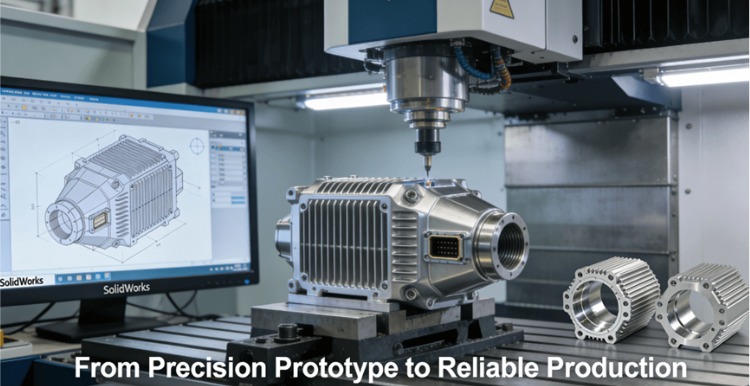
The landscape of Australian technology innovation is vibrant, yet many tech companies face persistent hurdles in product development: protracted manufacturing cycles, escalating costs, and inconsistent precision, especially for components with complex geometries. Traditional manufacturing methods often fall short in supporting the rapid iteration required for cutting-edge technology solutions, leading to performance compromises and delayed time-to-market. This article delves into how precision CNC milling provides a robust, efficient, and precise manufacturing solution, streamlining the journey from prototype to full-scale production. The following five key questions will elucidate the transformative value of this technology for Australia’s tech sector.
What is Precision CNC Milling, and How is it Transforming the Tech Manufacturing Landscape?
Precision CNC milling is a subtractive manufacturing process where computer-numerical-control (CNC) systems direct multi-point cutting tools to remove material from a solid block, achieving exceptionally tight tolerances and complex geometries. Unlike manual machining, the entire process is driven by digital CAD/CAM instructions, ensuring unparalleled repeatability and accuracy. This technology is fundamental for a modern technology solutions provider, as it directly translates digital designs into physical reality with minimal deviation.
The core advantage lies in its ability to machine intricate features—deep pockets, fine threads, complex contours, and thin walls—that are essential for advanced electronics, robotics, and communication devices. Adherence to international standards for repeatability and precision ensures that every batch of parts is virtually identical, a critical factor for product reliability. For Australian tech firms, this means the ability to produce high-quality, functional prototypes and end-use parts in-house or through a specialized partner, dramatically enhancing both product integrity and manufacturing agility. It bridges the gap between innovative design and manufacturable, high-performance hardware.
Why is Precision CNC Machining Critical for Technology Solutions Providers?
For businesses developing sophisticated business technology solutions, the performance of the final system is inextricably linked to the quality of its individual components. Precision CNC machining is not merely a production step; it is a cornerstone of product viability. In applications ranging from compact IoT sensors and medical devices to industrial automation rigs, the functionality depends on CNC machined parts that meet exacting specifications for fit, form, and function.
Tolerances, often as tight as ±0.005mm, ensure components assemble seamlessly and operate reliably. Material selection—from high-strength aluminum and stainless steel to advanced engineering plastics—directly impacts product weight, thermal properties, and durability. Furthermore, secondary surface treatments like anodizing or plating can enhance corrosion resistance, electrical conductivity, or aesthetic appeal. Standardized quality control processes, akin to those referenced in manufacturing standards, are vital. A technology solutions provider relying on non-precision parts risks systemic failures, increased warranty claims, and reputational damage. Therefore, investing in precision machining is an investment in the foundational quality and market success of the technological solution itself.
How to Choose the Right Custom CNC Milling Service for Your Project?
Assess Technical Capabilities and Compliance
The foundation of a successful partnership lies in a supplier’s technical prowess and formalized quality systems. A competent partner must demonstrate proven expertise in machining the specific materials and complex geometries a project requires, ensuring they can translate designs into viable parts.
l The Role of Specialized Expertise
This expertise goes beyond operating machines; it encompasses deep knowledge of material behaviors, cutting tool performance, and advanced programming to achieve optimal results, which is fundamental for producing reliable custom machined parts.
l The Importance of International Certifications
Possessing relevant international certifications is non-negotiable. While ISO 9001 signifies a foundational quality management system, industry-specific standards are critical. IATF 16949 is essential for automotive components, and AS9100D is the aerospace benchmark. These are not mere paperwork but testify to a commitment to documented processes, full traceability, and continuous improvement.
Scrutinize the End-to-End Workflow
Understanding a vendor’s process from quote to delivery prevents unforeseen issues. A seamless workflow typically begins with receiving design for manufacturability (DFM) feedback, where a competent partner analyzes a design to suggest modifications that enhance producibility, reduce cost, or improve strength. This is followed by transparent quoting, where detailed estimates break down costs for material, machining time, setup, and finishing. Finally, integrated quality assurance ensures that in-process and post-process inspection reports, such as those containing CMM data, are standard procedure throughout the manufacturing cycle.
For a deep dive into technical parameters and process insights, one can refer to a comprehensive resource like the precision CNC milling guide, which details capabilities and considerations.
Evaluate Scalability and Communication
Finally, consider the supplier’s ability to scale with your project, from a few custom CNC milling prototypes to mid-volume production. Responsive and clear communication is equally important, as it ensures alignment throughout the project lifecycle and facilitates quick resolution of any technical queries.
How Does CNC Milling for Prototypes Accelerate Tech Product Development?
CNC milling for prototypes is a catalyst for innovation, particularly for an Australian tech company racing to validate concepts and capture market opportunities. Unlike purely aesthetic 3D-printed models, CNC milled prototypes are functional. They are made from the intended end-use material, allowing for rigorous real-world testing of mechanical properties, thermal performance, and assembly fit.
The workflow is streamlined: a CAD model is translated into machine code, and a precision CNC milling center produces a physical part, often within days. This rapid turnaround enables an iterative development cycle. Engineers can test a design, identify flaws (like interference or stress points), modify the CAD file, and have a revised prototype in hand swiftly. This “fail fast, learn faster” approach significantly compresses the R&D phase. It allows for thorough functional testing, user experience trials, and even early engagement with potential investors or customers using high-fidelity units. By de-risking the design before committing to expensive production tooling, CNC milling for prototypes saves substantial time and capital, getting superior products to market faster.
How Do Precision CNC Machining Services Support Scaling Enterprise Tech Solutions?
Transitioning from a validated prototype to volume production is a critical phase. Professional precision CNC machining services provide the framework for this scaling, ensuring that the quality and performance of the first unit are maintained in the thousandth.
Process Optimization for Volume
Scaling is not merely about running the prototype program longer. It involves optimizing the entire manufacturing process for efficiency and consistency, which includes critical steps such as toolpath optimization to streamline CNC code and minimize machining time and tool wear, dedicated fixture design to enable faster and more accurate part handling, and strategic production scheduling to batch operations and maximize machine utilization.
Ensuring Quality Consistency at Scale
Maintaining tight tolerances across a production run is paramount. This is achieved through Statistical Process Control (SPC), regular calibration of equipment, and first-article and in-process inspections. A certified precision CNC machining services provider will have these quality gates embedded in their workflow, providing the data and confidence that each shipment meets specification.
l Supply Chain and Logistics Integration
A full-service partner manages more than just machining. They handle material procurement, securing raw materials with consistent quality and proper certification. Furthermore, they coordinate all necessary secondary operations, such as surface finishing, heat treatment, or sub-assembly. Finally, they manage inventory and reliable shipping logistics, which is crucial for supporting just-in-time manufacturing models.
l The Value of a Comprehensive Partnership
The most significant value comes from a partner offering a true end-to-end solution. From initial DFM support through to final delivery, a service like integrated milling services ensures a seamless handoff, reduces managerial overhead for the tech company, and mitigates risks associated with coordinating multiple vendors. This allows the tech company to focus on its core competency: innovation and market growth.
Conclusion
In summary, precision CNC milling offers Australian technology companies a formidable tool to overcome traditional manufacturing constraints. By enabling high-accuracy fabrication, accelerating prototype iteration, and providing a scalable path to standardized production, it enhances product quality, controls costs, and crucially, speeds time-to-market. For tech innovators, partnering with a capable manufacturing expert is a strategic lever for competitive advantage.
If you are seeking a reliable precision manufacturing partner to support your next-generation technology solution, consider exploring specialized providers like JS Precision. Reach out for a customized CNC milling solution quote and technical consultation to bring your designs to life with confidence.
Author Bio
This article was contributed by a manufacturing technology specialist with over 15 years of experience in the precision machining industry, focusing on providing optimized manufacturing solutions for technology companies.
FAQ Section
Q: What is the tightest tolerance achievable with precision CNC milling?
A: Advanced precision CNC milling can achieve tolerance control as tight as ±0.005mm, meeting the manufacturing requirements for most high-precision technical components and ensuring product performance and reliability.
Q: What types of materials are suitable for CNC machining?
A: CNC milling supports a variety of materials, including aluminum alloys, stainless steel, titanium alloys, and engineering plastics. The appropriate material can be selected based on the specific performance requirements of the technical product.
Q: What is the typical lead time from design to prototype delivery?
A: Depending on complexity, precision CNC prototype manufacturing typically takes 3-7 business days. Expedited services can further shorten delivery time, supporting rapid product iteration.
Q: How is quality consistency ensured for CNC machined parts?
A: Quality consistency in production is ensured through certified quality management systems (e.g., ISO 9001), advanced inspection equipment, and strict process controls, guaranteeing the dimensional accuracy and performance consistency of every part.
Q: Is the cost difference between low-volume and high-volume production significant?
A: CNC machining offers excellent production flexibility, maintaining cost-effectiveness from low to high volumes. Further unit cost reduction can be achieved through process optimization.