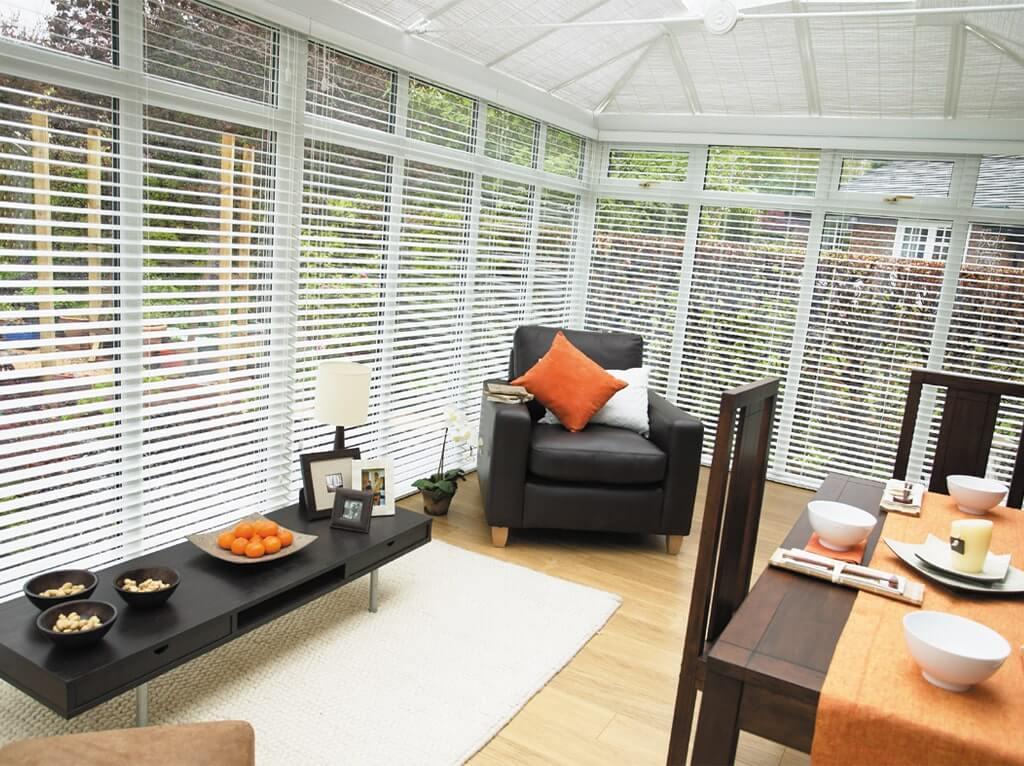
A conservatory promises the best of both worlds — garden views with indoor comfort — but without the right window dressing it too often becomes a sauna in summer and a fridge in winter. The fix is almost entirely about controlling the glass.
Tame the temperature
Walls of glass and a glazed roof turn a conservatory into a heat trap. Fitting proper conservatory blinds across the windows, and ideally the roof, blocks the fierce summer sun and holds warmth in on cold evenings, which is what makes the space genuinely liveable rather than seasonal.
Insulate against the cold
Winter is the other half of the problem. thermal blinds with a cellular structure trap a pocket of insulating air against the glass, cutting the heat loss that makes an unheated conservatory unusable from October onwards. The energy saving is a welcome bonus.
Flexible daytime light
A conservatory is a living space, so you want to shape the light, not just block it. day and night blinds let you filter harsh glare for reading or watching television at midday, then open up for the full garden view — all from a single, adjustable blind.
Materials that cope
Conservatories get damp and hot, so choose fabrics that resist fading and moisture. Wipe-clean and moisture-tolerant materials last far longer in this environment than delicate weaves, and pale, reflective colours help keep the space cooler.
Privacy and evening use
A conservatory is mostly glass, which is lovely by day and exposing by night, when the lit interior is on full display to the garden and neighbours. Blinds that close for the evening turn the space from a fishbowl into a cosy room you actually want to sit in after dark, whether that is a dining area or a quiet reading spot.
Think about the mix of coverings across the different faces of the room. The side windows, the doors and the roof all catch the sun at different times, so a combination — roof blinds for the overhead heat, adjustable blinds on the sunniest elevation, and simpler coverings elsewhere — usually works better than treating every pane the same. Getting that balance right is what makes the room comfortable from morning to night.
Done properly, a conservatory earns its keep twelve months a year. Control the sun in summer, insulate in winter, and keep the daytime light adjustable — and the room finally delivers on the promise that made you build it.
Planning the whole space
A conservatory usually needs a combination of blinds rather than a single solution, so it helps to plan the whole room at once. Work out which elevations catch the harshest sun and prioritise those, decide whether the roof needs covering as well as the sides, and choose a coordinated fabric family so the finished space looks considered rather than piecemeal. Because there is a lot of glass, the cost can add up, so phasing the project — roof and sunniest side first — is a practical way to make the room usable sooner without doing everything in one go.