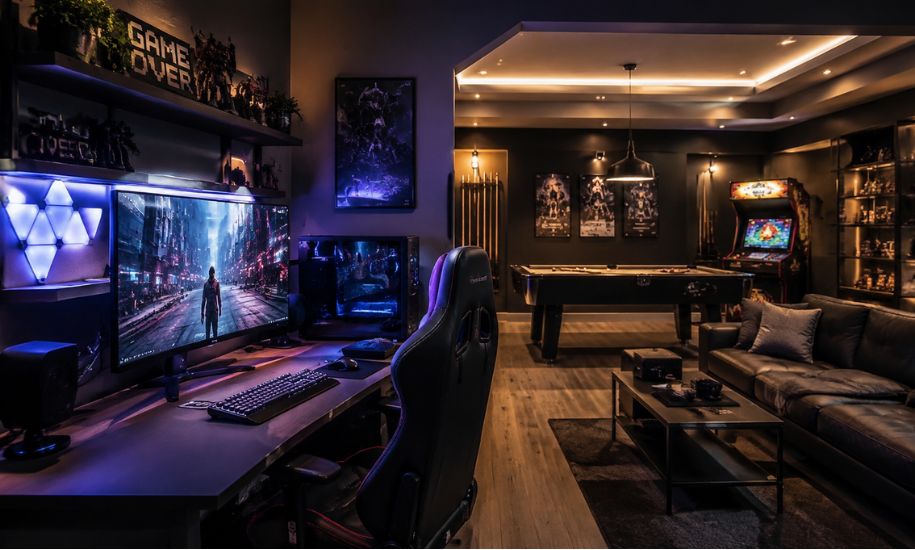
Once the preserve of dedicated enthusiasts with a spare basement and a generous budget, the home games room has quietly gone mainstream across the UK. Interior designers are fielding more requests for them than ever before, estate agents are flagging them as a selling point, and homeowners are increasingly converting everything from spare bedrooms to garden outbuildings into dedicated entertainment spaces. But is a games room genuinely worth the investment, or is it one of those renovation projects that sounds exciting and then ends up being used twice a year?
Here is everything you need to know before committing to the idea.
What Counts as a Games Room in 2026?
The definition has broadened considerably. A games room is no longer necessarily a neon-lit battlestation built around a high-spec PC, nor is it limited to the classic billiards table in a mahogany-panelled study.
PC and console gaming remain the most common starting point – a high-refresh monitor, an ergonomic chair, and a well-managed desk setup are the core ingredients, with lighting and acoustics built around them. Console lounges take a more sociable approach, centred on a large-format TV or projector, comfortable seating, and multiplayer titles designed for in-person play.
Tabletop and board gaming have seen a significant resurgence, and a dedicated space with a large central table, good overhead lighting, and proper storage for games and accessories makes a meaningful difference to the experience. Similarly, traditional games room classics, pool tables, dart boards, table football, and bar billiards, remain perennially popular and are increasingly being designed into spaces that feel more like a stylish lounge than a pub back room.
Online gambling has become a significant driver of dedicated home setups, with a growing number of UK players creating spaces specifically designed around poker, roulette, slots, and live dealer games. Playing online casino games from a purpose-built room, rather than a sofa or kitchen table, makes a genuine difference. A large monitor or dual-screen arrangement improves visibility, quality headphones enhance the live dealer atmosphere, and a comfortable, supportive chair makes longer sessions far more sustainable.
Why So Many UK Homeowners Are Making the Switch
The rise of hybrid working has had a significant effect on how people think about their homes. With more time spent at home, investing in a games room feels both practical and rewarding. A dedicated space creates a clear boundary between work and leisure, helping to prevent burnout and supporting overall well-being. For a great many people, it has become a genuine sanctuary, somewhere to decompress and enjoy uninterrupted time on their own terms.
There is also the social dimension. A well-designed games room transforms how you entertain. Instead of guests gravitating towards the kitchen or crowding into the living room, a separate space with a pool table, arcade machine, or large-format gaming setup becomes a natural focal point for gatherings. Many homeowners find that their home quickly becomes the preferred venue for friends and family events once a games room is installed.
And the numbers back the trend up. The global gaming furniture market was valued at over £1.7 billion in the past year and is projected to grow at nearly 15% annually through to 2035. The #gamingroom hashtag has accumulated more than 121,000 mentions on TikTok alone, with setups ranging from minimalist desk arrangements to full cinema-style rooms.
Where to Put Your Games Room: The Main Options
One of the first and most important decisions is where in or around your home the games room will actually be located. The right location depends on the type of gaming you have in mind, how much noise and late-night use you anticipate, and how much structural work you are prepared to take on.
Spare Bedroom Conversion
The most straightforward and budget-friendly route. A spare bedroom requires minimal structural work and can be transformed with new flooring, paint, dedicated lighting, and the right furniture. Depending on your setup, the total cost of a well-finished PC gaming room can range from around £2,000 to £5,000, including equipment.
Basement or Cellar Conversion
A popular choice for homeowners with an underused lower ground floor. Converting an existing cellar in the UK currently costs between £1,200 and £2,250 per square metre, with a typical project running between £25,000 and £55,000 depending on size, waterproofing requirements, and finish level. The result is a fully separate, acoustically isolated space that is ideal for a games room, particularly one that sees late-night use.
Loft Conversion
A less obvious choice but a viable one, particularly for homes where the loft is already partially converted. The separation from the main living area makes it well-suited to noisier gaming setups or home cinema arrangements.
Garden Room
Increasingly popular across the UK, an insulated garden games room provides a fully separate, distraction-free environment without entering the house. A well-designed garden room can typically be installed in two to five days, comes fully fitted with heating, lighting, power points, and flooring, and can add between 5% and 15% to your property’s value. Prices vary widely by size and specification but start from around £10,000 for a basic insulated structure.
How Much Does a Home Game Room Cost?
The honest answer is: as much or as little as you choose to spend. The range in the UK is enormous.
At the entry level, converting a spare bedroom into a gaming setup with a gaming desk, monitor arm, ergonomic chair, ambient LED lighting, and a mid-range PC or console can be done for £1,500 to £3,000. A monitor arm (around £30–£50), LED strip lighting (£25–£50), and a quality desk pad (£20–£40) are widely cited as the three highest-return purchases for transforming a basic setup into something that looks genuinely considered.
A more substantial conversion, new flooring, acoustic panels, custom shelving, quality seating, a high-spec display, and a full gaming PC typically falls in the £5,000 to £15,000 range.
At the premium end, a purpose-built basement games room with built-in storage, a bar area, professional lighting, surround sound, and a cinema-quality display can run well beyond £30,000 when structural and fit-out costs are included.
In terms of property value, a well-designed games room can return between 50% and 70% of its cost at resale, with high-end features such as custom cabinetry, integrated home theatre systems, and professional-grade equipment proving particularly appealing to buyers.
So, Is It Worth It?
For regular gamers, people who entertain often, or homeowners with an underused room or outbuilding, a games room is one of the more genuinely satisfying home improvements available. It adds dedicated purpose to otherwise wasted space, creates a clear separation between leisure and the rest of the home, and delivers a return, both in day-to-day enjoyment and at resale, that most homeowners find well worth the investment.
The key is to build it around how you actually live, rather than how you imagine you might. A thoughtfully designed, dual-purpose space that earns its place every time it is used will always outperform a showpiece room that sits empty.
You may also read: Avoiding Common Mistakes in Poker: Strategies for Better Play