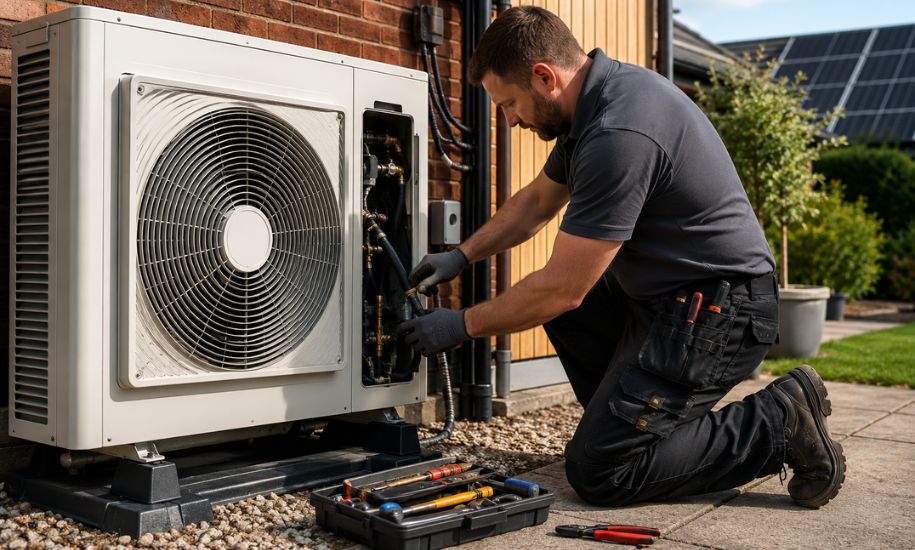
People are looking for ways to manage rising energy costs and make more sustainable choices at home. At the same time, new technologies are creating opportunities for plumbing and heating businesses that are willing to adapt. You already have many of the practical skills needed to succeed in this market, from understanding domestic systems to building trust with homeowners. By expanding into renewable energy, you can respond to customer demand while creating new income streams for your business.
Understanding the Market Opportunity for Renewable Heating
Many homeowners already rely on you for repairs and advice, which means you have regular opportunities to discuss alternatives to traditional heating systems. Start by identifying demand in your local area. Consider the types of properties you commonly work on, as older homes may need additional improvements before installing certain technologies, while newer properties may be more suitable. Talking to customers during routine visits can help you understand their concerns about costs and efficiency.
Building the Skills and Workforce Needed
Moving into renewable heating does not mean replacing your current expertise. Technologies such as heat pumps still depend on skills you use every day, including plumbing and system installation. However, you need additional training to understand system design and customer requirements. Investing in recognised qualifications can help you build credibility with customers and access more opportunities. Training through organisations such as the Microgeneration Certification Scheme can give you the knowledge needed. You can also train your existing engineers gradually, allowing your business to expand without disrupting current services.
Expanding Services Through Heat Pumps and Government Incentives
Heat pumps represent a practical entry point for many plumbing and heating businesses because they connect closely with your existing experience. You can add value by assessing properties, explaining whether a heat pump is suitable and helping customers understand what preparation work they may need.
Government schemes such as the Boiler Upgrade Scheme help eligible homeowners reduce upfront costs, making renewable heating more achievable. Understanding these options allows you to provide clearer guidance and become a trusted adviser rather than simply an installer.
Creating a Profitable Renewable Business Strategy
Before investing heavily, review local demand, training costs, equipment requirements and potential pricing. Many businesses begin by adding renewable assessments or heat pump servicing alongside their existing work. You can also grow your offering through partnerships with electricians and energy advisers. These relationships allow you to provide a more complete service while creating referral opportunities.
Your reputation remains one of your biggest advantages. Homeowners want installers who communicate clearly and provide dependable support after installation. By combining your existing heating knowledge with renewable expertise, you can build a resilient business that meets changing customer expectations and creates long-term value.
Preparing for the Future of Heating
The move towards renewable heating is about positioning your business for the way customers will buy heating solutions in the future. The companies that succeed will be those that combine technical knowledge with strong customer relationships and a willingness to keep learning. By taking practical steps now, you can strengthen your reputation and remain competitive as the industry evolves. Renewable heating offers a chance to build on the foundations you have already created while shaping a more sustainable future for your business.
You may also visit: Business.