Hybrid working has changed what an office is for. People come in on different days, share desks and move between teams, and the old assumption that everyone has a permanent place to sit and store things no longer holds. That shift has quietly pushed two pieces of furniture up the priority list: storage that people can rely on, and seating that works for everyone who sits in it.
The problem with shared desks
When desks are shared, belongings need somewhere to go. Without a proper answer, coats end up over chair backs, bags sit on the floor and personal items get left on desks overnight. It looks untidy, and it makes the next person’s day a little harder.
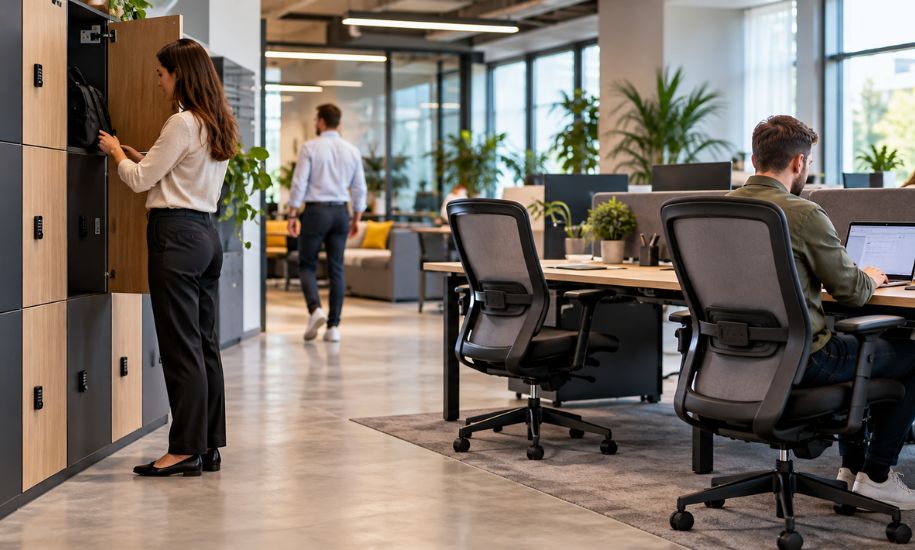
A set of lockers solves most of this in one go. Each person gets a secure place for their things, desks can be cleared at the end of the day, and the office looks organised even when it’s busy. For businesses with hot-desking, they also offer something a desk drawer can’t: a fixed spot that stays with the employee, whichever desk they happen to be using that day.
There’s a practical benefit for facilities teams too. A tidy, clear desk is quicker to clean and easier to reset for the next user, and nobody has to wonder whether a stray jacket belongs to someone who’s coming back.
Seating has to work for more than one person
The second challenge is the chair. In a traditional office, each person could adjust their own seat once and leave it. In a shared setting, a single chair might be used by several people of different heights and builds across a week.
That’s why adjustability has become so important. Good ergonomic office chairs let each user change the seat height, backrest, armrests and seat depth in a matter of seconds, so the chair fits whoever sits down. Without that flexibility, people either put up with discomfort or spend precious time trying to get comfortable.
Comfort has a direct link to how people work. A supportive seat reduces the aches that build up over a long day, which makes it easier to concentrate. It also matters for retention. Employees who feel looked after in the office are generally more willing to make the journey in.
How it changes the feel of the office
There’s a softer side to all this as well. An office that feels organised sends a message to employees that their comfort and time matter. Arriving to a clear desk and a chair that fits you in a couple of seconds is a small thing, but it removes the low-level irritation that can colour the start of a working day.
Visitors notice too. Clients and candidates form an impression of a business in the first few minutes, and a tidy, well-equipped space suggests a team that has things under control.
What to look for when buying
If you’re updating a hybrid workspace, a few checks can save you money and frustration:
● Choose controls that are clearly marked and easy to use without instructions.
● Look for durable upholstery that can stand up to frequent use by different people.
● Pick storage sized for typical items, such as a coat, a laptop bag and a lunch box.
● Check that locks are simple enough for people to use every day without needing support.
Before you buy, it’s also worth talking to the people who’ll use the space. A short survey asking what they find frustrating about the current setup can reveal problems that facilities teams never see, such as awkward locker positions or chairs that nobody can find the controls for.
Getting the numbers right
One of the trickiest questions is how much storage to provide. If everyone has a locker, you may need more than you have desks, because people who only come in a couple of days a week still need somewhere to leave things. Others share. Looking at attendance patterns for a few weeks will give you a realistic picture before you buy.
The same goes for seating. A mixed approach often works well, with the most adjustable chairs in the busiest shared areas and more standard options in quieter spots.
Maintenance is another point in favour. Quality storage and seating are designed for heavy use, which means fewer repairs, fewer replacements and less disruption. Over several years that adds up, and it’s one of the reasons many businesses treat these items as investments rather than expenses.
Small changes, big difference
Neither of these upgrades is flashy, but both address problems people notice every single day. A clear desk and a comfortable chair might not feature in a company’s strategy documents, yet they shape how it feels to walk into the office on a Tuesday morning.
For businesses trying to make the office a place people actually want to be, they’re a sensible place to start. They’re relatively simple to introduce, they don’t need a major refit, and the benefits show up quickly in how the space looks and how the team feels.
You may also read: Business.