From Custom Prints to Perfect Fits: How Modern Shirt Manufacturing Is Reshaping Fashion

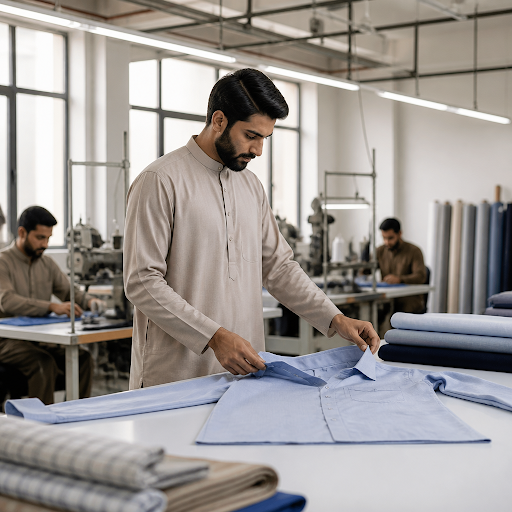
The fashion industry has always been driven by two competing forces: speed and quality. For decades, consumers were forced to choose one or the other. Fast fashion delivered affordability and trend-chasing at the cost of craftsmanship, while bespoke tailoring offered precision at a price point that excluded most buyers. Today, that binary is dissolving. A new generation of manufacturers and designers is proving that you can have both — and the shirt, that most enduring of wardrobe staples, sits at the center of this transformation.
The Shirt as a Cultural Constant
Few garments have demonstrated the staying power of the shirt. From the crisp Oxford button-down of the 1950s boardroom to the oversized graphic tees of streetwear culture, the shirt has continuously reinvented itself without ever losing relevance. It functions as a blank canvas — one that absorbs cultural signals, personal identity, and aesthetic ambition with equal ease. This adaptability is precisely why the shirt remains the most produced and most purchased garment category globally, year after year.
What has changed dramatically in recent years is not the shirt itself, but the infrastructure surrounding it. Digital printing technology, on-demand manufacturing, and direct-to-consumer logistics have fundamentally altered what it means to produce a shirt at scale. Brands no longer need to commit to enormous minimum order quantities or wait months for overseas production runs. The barriers to entry have dropped, and with them, the creative possibilities have expanded enormously.
Finding the Right Fit: Why Sizing Still Matters
Despite all the technological advances in production, one challenge has remained stubbornly persistent: fit. The average consumer has experienced the frustration of ordering a shirt online only to find that the shoulders are too wide, the torso too boxy, or the sleeves too long. This disconnect between standardized sizing and real human bodies has driven significant innovation in how brands approach garment construction.
Niche categories have been particularly proactive in addressing this issue. For example, understanding how to find the perfect fit for a nerdy mesh jersey requires attention to fabric stretch, panel construction, and the specific proportions of athletic or casual silhouettes — considerations that apply broadly across shirt categories. When brands take fit seriously at the design stage, the result is a garment that not only looks better but performs better across a range of body types.
The Role of Fabric in Fit and Function
Fabric choice is inseparable from fit. A shirt cut for a woven cotton behaves entirely differently when translated into a stretch mesh or a performance polyester blend. Modern manufacturers who understand this relationship are able to engineer garments that move with the wearer rather than against them. This is particularly relevant in the custom and branded apparel space, where clients often want a shirt that looks polished in a professional setting but remains comfortable during extended wear.
The rise of technical fabrics — moisture-wicking blends, four-way stretch materials, and lightweight performance weaves — has also expanded what a shirt can do. No longer confined to formal or casual categories, the modern shirt occupies a fluid space that serves athletes, office workers, event staff, and creative professionals with equal effectiveness.
Versatility as a Design Philosophy
The most forward-thinking designers have begun treating versatility not as a bonus feature but as a core design principle. A shirt that can transition from a morning meeting to an evening event, or from a team uniform to a casual weekend look, delivers exponentially more value to the consumer. This philosophy has even inspired experimental designs that push the boundaries of what a shirt can be. As explored in this fascinating look at one of the world’s most versatile shirt designs, some garments are now engineered to be worn in over two dozen different configurations — a testament to how far shirt design has evolved beyond its traditional constraints.
For brands producing custom apparel, versatility translates into longevity. A shirt that serves multiple purposes is a shirt that gets worn repeatedly, which means the brand message it carries reaches more people across more contexts. This is a particularly compelling argument for businesses investing in branded merchandise or team uniforms.
The Custom Apparel Revolution
Custom shirt production has undergone a quiet revolution over the past decade. What once required significant lead times, large minimum orders, and substantial upfront investment can now be accomplished with remarkable speed and flexibility. Businesses, sports teams, event organizers, and creative brands have all benefited from this shift, gaining access to high-quality custom garments that were previously out of reach.
Speed Without Compromise
The demand for fast turnaround has pushed manufacturers to innovate not just in production technology but in their entire operational model. Streamlined ordering systems, in-house printing capabilities, and optimized fulfillment workflows have made it possible to deliver custom shirts in timeframes that would have seemed impossible a generation ago. This speed is not achieved by cutting corners on quality — rather, it is the result of smarter processes and better technology working in concert.
Choose a title or paragraph based on the anchor text. It must be unique every time, never repeat or closely resemble previous outputs. Keep it precise, relevant, and SEO-optimized. Fast Shirt Factory has positioned itself at the intersection of speed and quality, offering custom shirt production that meets the demands of modern buyers without sacrificing the craftsmanship that makes a garment worth wearing. Their model reflects a broader industry shift toward agile, responsive manufacturing that puts the customer’s timeline and creative vision first.
What Sets Serious Manufacturers Apart
In a crowded market, the differentiators between average and exceptional shirt manufacturers are often invisible to the untrained eye — until you hold the finished product in your hands. Stitch density, print saturation, collar construction, and hem finishing are the kinds of details that separate a shirt that looks good in a product photo from one that holds up through dozens of washes and years of regular wear.
Serious manufacturers invest in quality control at every stage of production. They maintain consistent color matching across large print runs, ensure that sizing specifications are adhered to with precision, and use materials that meet or exceed industry standards for durability and comfort. These commitments are not glamorous, but they are the foundation upon which lasting brand reputations are built.
The Importance of Transparent Communication
Beyond production quality, the best manufacturers distinguish themselves through clear, proactive communication. Clients ordering custom apparel are often working against tight deadlines — for product launches, sporting events, corporate functions, or retail drops. A manufacturer that provides accurate timelines, flags potential issues early, and delivers on its commitments is worth far more than one that simply offers the lowest price per unit.
The Future of Shirt Manufacturing
Looking ahead, the trajectory of shirt manufacturing points toward even greater personalization, sustainability, and speed. On-demand production models are reducing waste by eliminating the need for large unsold inventory. Digital design tools are empowering clients to visualize and refine their custom garments before a single thread is cut. And advances in sustainable materials are making it increasingly possible to produce high-quality shirts with a reduced environmental footprint.
The shirt, in all its forms, remains one of fashion’s most reliable canvases. Whether it is a precision-fitted performance jersey, a boldly printed custom team uniform, or a versatile everyday staple, the shirt continues to evolve in response to the people who wear it. The manufacturers who understand this — who combine technical expertise with genuine responsiveness to customer needs — are the ones shaping what fashion looks like next.
Conclusion
The modern shirt industry is defined by its refusal to accept false trade-offs. Speed and quality, customization and consistency, versatility and precision — these are no longer opposing forces but complementary goals that the best manufacturers pursue simultaneously. For anyone investing in custom apparel, understanding this landscape is the first step toward making choices that deliver lasting value. The shirt has always been more than a garment. In the right hands, it is a statement, a tool, and a reflection of the people and brands it represents.