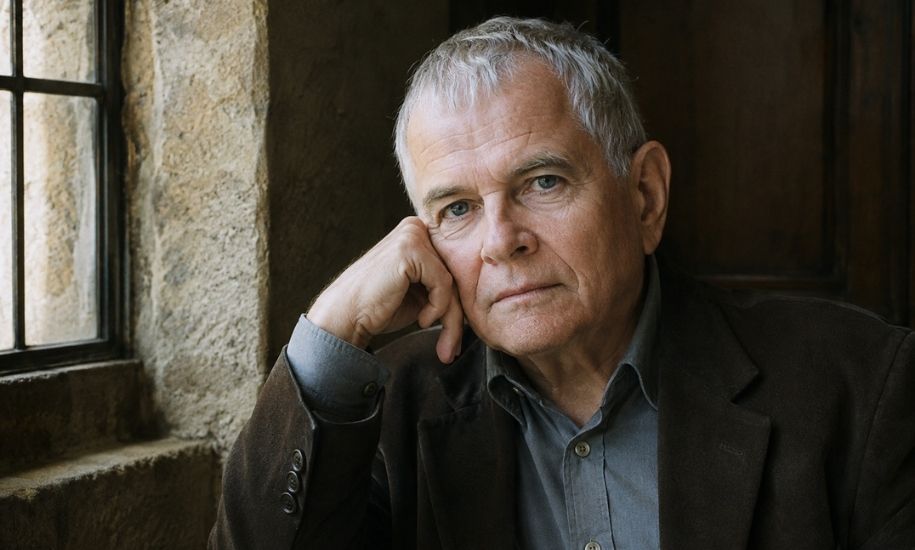
Ian Holm never needed the largest role in a film to leave its deepest mark. He could appear for a few scenes, speak in a measured voice and make a character feel as though he had lived for decades before the story began. Millions remember him as Bilbo Baggins in The Lord of the Rings, but that late-career success represents only one part of a long, unusual life in acting.
Holm built his reputation through Shakespeare, helped define the threatening humour of Harold Pinter and then abandoned regular theatre work after a frightening collapse in confidence. Cinema gave him a second career, although he rarely followed a predictable route. He played an athletics coach, an android, Napoleon Bonaparte, a priest, a lawyer, a hobbit and a scheming animated chef. Each performance carried the same attention to voice, movement and concealed emotion.
His small stature often worked in his favour. Directors could place him beside taller, more conventionally imposing actors and allow his concentration to alter the balance of a scene. Holm did not compete through volume. He made audiences watch him more closely.
The Superintendent’s Son Who Found an Escape on Stage
Ian Holm Cuthbert was born on 12 September 1931 in Goodmayes, Essex, under circumstances that sound like the opening of an unconventional novel. His father, Dr James Harvey Cuthbert, was a psychiatrist and superintendent at West Ham Mental Hospital. The family lived close to the institution, and Holm spent part of his childhood surrounded by its buildings, staff and patients.
The hospital did not frighten Holm as much as outsiders might expect. Its residents were part of the world he knew, not distant figures hidden from public life. He observed people whose behaviour did not follow familiar social rules, an experience that may have encouraged his interest in the ways individuals speak, move and conceal distress. He later became an actor known for revealing instability beneath apparently controlled behaviour.
Holm’s father occupied an unusual place in British psychiatric history. He worked during a period when electric convulsive therapy and other physical treatments were gaining support within institutional medicine. The son did not follow him into psychiatry, but both careers involved close attention to human behaviour. Holm examined it through scripts rather than clinical practice.
Theatre entered Holm’s life when he saw a stage production of Les Misérables at about the age of eight. The experience gave him a clear ambition at a time when acting did not seem like an obvious profession for a quiet boy from Essex. He began performing at school and gradually treated the interest as serious work rather than childhood entertainment.
Holm later studied at the Royal Academy of Dramatic Art in London. His training emphasised speech, physical control and the technical demands of classical theatre. National Service interrupted his studies, sending him into the British Army before he could establish a professional career. The interruption delayed his progress but also removed him from the protected environment of drama school.
His professional name came from his mother’s maiden name. By dropping Cuthbert and working as Ian Holm, he created a short, memorable identity that suited theatre programmes and film credits. The decision also separated the performer from the respectable medical household in which he had grown up.
Holm never developed the public manner of an actor who wanted attention between performances. He often appeared reserved in interviews and spoke about his craft without turning every answer into a grand statement. His private manner made his transformations more striking. The quiet man arriving at rehearsal could become a vicious Pinter character or a king collapsing under the weight of his own decisions.
Physical appearance also shaped the roles available to him. Holm stood about five feet five inches tall and lacked the build traditionally associated with heroic leads. British theatre still offered him kings and warriors, but cinema usually placed him in character parts. He responded by making supporting roles unusually complete.
That ability rested on observation rather than showmanship. Holm paid attention to rhythm, posture and hesitation. He understood that fear might appear through a stiff hand, while ambition could emerge through excessive politeness. His performances rarely announced what a character felt. They invited viewers to detect it.
Before Hollywood, Holm Helped Change British Acting
Holm established himself as a major stage actor long before Alien or Chariots of Fire brought him international recognition. He joined the Shakespeare Memorial Theatre company at Stratford-upon-Avon in the late 1950s and became part of the Royal Shakespeare Company during its formative period. The work demanded stamina because actors moved between productions and sometimes played sharply different roles within the same season.
His early Shakespeare credits reveal surprising range. Holm played Puck opposite Charles Laughton’s Bottom in Peter Hall’s 1959 production of A Midsummer Night’s Dream. Puck suited his compact frame, quick movement and talent for suggesting mischief without becoming merely decorative. He returned to the role when Hall directed the 1968 film version.
Holm also took on Prince Hal, Henry V and the young Gloucester who developed into Richard III. These parts required more than strong verse speaking. Prince Hal moves between tavern humour and royal responsibility, while Richard uses wit to disguise cruelty. Holm could shift emotional temperature without visibly changing his method.
The RSC’s vast Wars of the Roses cycle became one of his defining theatre projects. The production condensed Shakespeare’s history plays into a sustained account of political violence and dynastic collapse. Holm’s Richard emerged from that world rather than appearing as an isolated theatrical villain. His intelligence made the character disturbing because the cruelty seemed deliberate, not impulsive.
Holm belonged to a generation that moved Shakespearean acting away from ceremonial delivery. Earlier traditions often favoured projection, formal gestures and a recognisably theatrical voice. Holm could handle those techniques, but he used them selectively. He made the language sound as though the character had formed each thought in the moment.
Peter Hall recognised that quality and repeatedly trusted him with demanding material. Holm’s acting remained clear enough for a large auditorium while retaining the detail associated with film. The approach later allowed him to move between stage and screen without appearing to belong exclusively to either medium. The RSC remembered him as one of the company’s great actors, highlighting roles that predated his fame in cinema.
Harold Pinter’s The Homecoming gave Holm a different kind of challenge. The play follows a university professor who brings his wife into a tense north London household dominated by his father and brothers. Holm played Lenny, a pimp whose polite language barely conceals violence. The role depends on pauses, incomplete statements and sudden changes in control.
Holm understood that Pinter’s pauses were active rather than empty. Lenny listens, judges and tests the people around him before deciding how to respond. Holm could make a silence feel aggressive without adding unnecessary movement. He allowed the audience to sense calculations that the script never stated directly.
The production transferred to Broadway, where Holm won the 1967 Tony Award for Best Featured Actor in a Play. Paul Rogers, who played Max, won the leading-actor award, while Peter Hall received the prize for direction. The official Tony record confirms how strongly the production registered in New York despite its severe, unsettling style.
Holm’s success in The Homecoming also showed why he resisted simple classification. He could play Shakespearean royalty, supernatural comedy and contemporary menace without relying on the same external mannerisms. The connection between the roles came from precision. He identified what each character wanted and removed any action that did not serve that desire.
Film producers gradually noticed his work. Holm received a BAFTA for his performance in the 1968 military drama The Bofors Gun, playing a difficult gunner whose resentment damages the men around him. The role offered none of the comforting qualities later associated with Bilbo. It demonstrated his willingness to inhabit abrasive characters without asking audiences to approve of them.
The Night His Voice Disappeared
Holm’s theatre career changed abruptly in 1976 during a production of Eugene O’Neill’s The Iceman Cometh. He experienced a severe attack of stage fright and found himself unable to continue performing. The crisis carried particular force because Holm was not an inexperienced actor facing his first large audience. He had spent roughly two decades working at the highest level of British theatre.
Stage fright can sound minor when described as nervousness, but Holm’s experience went far beyond pre-performance anxiety. His confidence collapsed during the run, leaving him unable to trust the skills that had previously seemed automatic. Lines, timing and physical movement became sources of fear rather than dependable tools.
The event also exposed the risks built into live performance. A film actor can stop, repeat a line or adjust a scene after discussing it with the director. A stage actor must continue in front of an audience even when concentration breaks. The knowledge that a failure cannot be edited may intensify the next moment of fear.
Holm largely withdrew from theatre after the episode. The decision looked extraordinary because the stage had given him his professional identity, major awards and some of his finest roles. Yet returning immediately could have made the fear worse. Film and television offered him a way to continue acting within a more controlled process.
Cinema benefited from his departure. Holm had already appeared on screen, but he now gave the medium more of his time and attention. Directors gained an actor with classical training who understood how little movement a camera requires. He could reduce a stage-sized idea to a change in his eyes or the slight tightening of his mouth.
Holm never offered a neat psychological explanation for the breakdown. His father’s profession made the absence of a diagnosis particularly ironic. The son of a psychiatrist could analyse a character’s motives with great accuracy, yet he could not fully account for his own loss of confidence.
His withdrawal was not absolute. Holm returned to the stage occasionally when a role or director gave him sufficient reason to face the fear again. Each return carried more significance than an ordinary new production because it required him to enter the environment he had learned to avoid.
His greatest return came in Richard Eyre’s 1997 National Theatre production of King Lear. Holm played the ageing ruler as a recognisable man rather than a remote monument. His Lear could be vain, affectionate, childish, frightening and suddenly frail. The performance drew strength from the actor’s age and from his knowledge of personal vulnerability.
Lear’s loss of authority held particular meaning for Holm. The king begins the play believing that language will continue to obey him. He expects declarations of love, political loyalty and family order. Instead, his words lose their power. Holm, who had once found himself unable to command the stage, understood the terror inside that collapse.
The performance received the Olivier Award for Best Actor and became one of the National Theatre’s notable Shakespeare revivals. It did not erase Holm’s earlier crisis, but it proved that fear had not destroyed his ability. The National Theatre still identifies his Lear as one of the productions that reinvigorated classic drama.
Five Screen Performances That Reveal His Range
Ridley Scott’s Alien gave Holm one of cinema’s most memorable betrayals. He played Ash, the science officer aboard the commercial spacecraft Nostromo. Ash initially appears calm, practical and slightly detached. His behaviour becomes more troubling as the crew fights the creature loose inside the ship.
Holm avoids signalling the secret too early. Ash does not move like a conventional robot, nor does he speak in an obviously mechanical voice. His coldness could pass for professional discipline. Only after his priorities become clear does the audience reinterpret his earlier decisions.
The revelation that Ash is an android leads to a violent sequence involving his damaged body and detached head. The effects team used animatronics, prosthetics and pale fluid to create a being whose interior looks manufactured but unpleasantly organic. Holm then delivers Ash’s final observations with calm admiration for the alien creature.
Holm made Ash frightening because he gave the character no theatrical hatred. The android does not need revenge and does not take the crew’s deaths personally. He follows the company’s orders and regards the alien as a perfect organism. His courtesy survives even after the crew has exposed and disabled him.
Chariots of Fire allowed Holm to create a very different figure. He played Sam Mussabini, the professional coach who trained Harold Abrahams for the 1924 Olympic Games. Mussabini occupies a complicated social position because the amateur athletic establishment looks down on paid coaching.
Holm gave Mussabini energy without turning him into a shouting sports-film instructor. The coach studies technique, corrects small errors and understands the psychological pressure facing Abrahams, a Jewish athlete confronting prejudice. His investment in the race feels personal, although he cannot watch from the stadium.
Mussabini’s private celebration provides the performance’s emotional peak. He hears the result from his hotel room and responds alone, punching through his straw hat with joy. Holm makes the moment large enough to register but private enough to suit a man excluded from the official arena.
The performance won Holm the BAFTA for supporting actor and brought him an Academy Award nomination. His work competed for attention in a film filled with music, period detail and inspirational speeches, yet he created its most grounded relationship.
Napoleon Bonaparte became one of Holm’s strangest recurring assignments. He played the French emperor in the television series Napoleon and Love, Terry Gilliam’s Time Bandits and Alan Taylor’s The Emperor’s New Clothes. Few actors receive three chances to reinterpret the same historical figure in unrelated productions.
Each Napoleon served a different purpose. Napoleon and Love treated him as a central historical character, while Time Bandits turned his obsession with height and conquest into eccentric comedy. The Emperor’s New Clothes followed an alternative history in which Napoleon escapes exile and attempts to reclaim his identity.
Holm resisted the temptation to play Napoleon as a single running joke. He found vanity, calculation and loneliness inside the familiar image. His own height made the casting obvious, but his intelligence prevented the performances from depending on physical resemblance alone.
Atom Egoyan’s The Sweet Hereafter gave Holm one of his most painful screen roles. He played Mitchell Stephens, a lawyer who travels to a Canadian town after a school-bus crash kills many local children. Stephens wants the parents to join a lawsuit, but his professional purpose conceals his own damaged relationship with his daughter.
Holm avoids presenting the lawyer as either a heroic investigator or a simple opportunist. Stephens knows how to guide grieving parents towards legal action, yet his interest in the case also reflects genuine anger. His controlled speech becomes a barrier against personal despair.
The performance depends on divided attention. Stephens listens to families while carrying thoughts he cannot share with them. Holm makes both levels visible without disrupting the conversation. That capacity to suggest an internal argument became one of his defining screen skills.
Animated comedy offered him another unexpected success. In Pixar’s Ratatouille, Holm voiced Skinner, the irritable chef who controls Gusteau’s kitchen and suspects that Linguini is hiding something. Holm gave the small, furious character clipped authority, turning a kitchen behind crowded restaurant tables into his personal domain.
Skinner could have become a routine cartoon villain. Holm instead treated his suspicions seriously, which made the escalating chases and confrontations funnier. His vocal performance used the same sharp timing that had served him in Pinter, although the result was comic rather than threatening.
From Frodo to Bilbo and the Life Beyond Middle-earth
Holm entered Middle-earth long before Peter Jackson cast him as Bilbo Baggins. In the BBC’s 1981 radio adaptation of The Lord of the Rings, he played Frodo. The production required him to create the journey through voice alone, distinguishing courage, exhaustion and the Ring’s growing influence without visual support.
That early role created a rare connection between two generations of Tolkien adaptation. Holm first played the younger hobbit carrying the Ring and later became the older relative who passes it on. The casting gave his Bilbo an accidental history extending beyond Jackson’s films.
Bilbo suited Holm because the character contains several contradictions. He is welcoming but secretive, comfortable but restless, generous but unable to surrender the Ring. Holm could move between those qualities in seconds. During Bilbo’s farewell party, his comic irritation gradually reveals real desperation.
The brief transformation at Rivendell remains one of Holm’s most startling moments. Bilbo asks to see the Ring, and desire briefly distorts his friendly face into something predatory. The visual effect lasts only a moment, but Holm prepares it through changes in breathing, focus and tone. The shock works because affection surrounds it.
Holm expressed surprise at the scale of the films’ reception. He joked that much of his fan mail went to Bilbo and was sometimes addressed to “Sir Bilbo” rather than Ian Holm. The character reached viewers who knew nothing about his Shakespearean career or his Tony-winning work with Pinter.
Parkinson’s disease complicated his later return as Bilbo in The Hobbit films. Holm could no longer approach the work as he had a decade earlier, so the production adapted around his health. His presence remained important because another actor, Martin Freeman, played the younger Bilbo. Holm connected the new trilogy to the emotional memory of the first.
Public honours recognised a career that never depended on conventional stardom. Holm became a CBE in 1989 and received a knighthood in 1998. The awards acknowledged his contribution across theatre, film and television rather than one commercially dominant role.
Holm’s private life contained several changes that he rarely turned into public drama. He married four times and had five children. His third wife was actor Penelope Wilton, with whom he appeared in the television adaptation of The Borrowers. In 2003, he married artist Sophie de Stempel.
De Stempel documented Holm’s final period through a series of pastel portraits. The images showed him at home and during declining health, offering a record more intimate than a conventional publicity photograph. Her work preserved the face of a man whose profession had depended on changing what that face communicated.
Health problems narrowed Holm’s activity during his final years. He received treatment for prostate cancer and lived with Parkinson’s disease, which affected his movement and ability to work. He died in hospital on 19 June 2020 at the age of 88 from a Parkinson’s-related illness. His family and carer were with him.
Holm left no single performance capable of summarising him. Ash shows his restraint, Mussabini his warmth, Napoleon his humour, Mitchell Stephens his buried pain and Bilbo his ability to move between comfort and danger. His Shakespeare and Pinter roles reveal the technical foundation beneath all of them.
His career also resists the familiar story of uninterrupted progress. A severe professional crisis removed him from the stage, but that retreat opened decades of screen work. He later returned to play Lear, confronting both one of theatre’s hardest roles and the environment that had once defeated him.
Holm’s most distinctive gift was compression. He could place ambition, fear and private history inside a short exchange without explaining any of them. Supporting parts became central memories because he understood that screen time and dramatic weight are not the same thing.
Bilbo may remain his best-known character, but Holm’s achievement reaches much further. He helped modernise Shakespearean performance, mastered Pinter’s threatening silences and carried theatrical precision into popular cinema. He rarely demanded an audience’s attention. He earned it, one exact detail at a time.
You may also visit: Celebrities.