A World Series of Poker Main Event runs across two weeks. A single day can stretch to 12 or 14 hours of play. The decisions are dense, the variance is high, and the difference between cashing for $20,000 and finishing in the top three for several million often comes down to one or two hands made on day six or seven.
The pros who reach the late stages of those tournaments are no longer treating preparation as a casual matter of staying sharp at the felt. The top of the field has adopted training programs that look closer to what an Olympic athlete does in the months before a competition than to anything that would have been considered a “poker routine” in 2005.
The shift reflects a broader understanding inside the professional poker world: long-term performance depends as much on physical and mental conditioning as it does on technical skill.
Physical Conditioning
Cardiovascular fitness and resistance training have become standard for serious tournament regulars. The reason is direct. A player sitting at a table for 14 hours suffers from the same circulation, posture, and oxygen-delivery problems that affect any sedentary worker, and those problems show up as slower decision speed and degraded concentration by hour 10.
The fix is the same fix endurance athletes have known about for a century. A player who has built a base level of cardiovascular fitness simply maintains better cognition deeper into the day.
Phil Galfond, Daniel Negreanu, and other top players who have spoken publicly about their routines all report regular gym sessions, often six days a week, with a mix of cardio and strength training work. Galfond in particular has documented the link between his win rate at high stakes and his physical training discipline.
The change in the professional culture happened gradually after 2015, when the data on cognitive performance and physical conditioning started reaching the player community through the same training-site channels that previously only covered strategy.
Sleep as a Performance Variable
The sleep research that started reshaping elite athletics in the 2010s has produced parallel changes in poker. Seven to nine hours of consistent sleep is now a non-negotiable for any player serious about a tournament run.
The reasoning is mechanical. Sleep consolidates the day’s learning, resets the emotional regulation systems, and restores the prefrontal cortex capacity needed for the working-memory-heavy work of poker.
Top players treat the sleep block with the same discipline a cyclist treats their pre-race rest. Screens go off 30 to 60 minutes before bed. Caffeine cuts off roughly 10 hours before planned sleep time. Room temperature, blackout curtains, and consistent wake times are all part of the standard routine.
The cost of a poorly slept Day 4 of a tournament is measurable in chips lost, and the cost of compounding bad sleep across a Main Event run can move a player from a deep finish to busting out before the money.
Nutrition and Energy Management
A balanced meal split of 40% protein, 40% complex carbohydrates, and 20% healthy fats has become the standard prescription for tournament players. The split protects against insulin spikes that cause the mid-afternoon energy crash, which is one of the most common causes of poor decisions during the second half of a long playing day.
Hydration is the other pillar. A player who has lost 2% of their body weight in water is operating at measurably reduced cognitive function. Bottles of water at the table, electrolyte mixes during longer days, and zero alcohol during a tournament run are the practical applications.
The move away from soft drinks and energy bars toward structured nutrition closely mirrors the broader athletic-performance trend seen across other high-focus competitive environments.
Some pros also use targeted supplements during multi-day events. Phosphatidylserine and acetyl-L-carnitine appear in the supplement stacks of several published routines, both with mild evidence behind them for sustained cognitive performance under fatigue.
The supplement stacks remain controversial and individual, but the underlying point is that the top of the field treats biochemistry as a variable to manage rather than a constant to ignore.
Mental Game Training
The most explicit borrowing from elite athletics is the formal mental game work. Sport psychology specialists have been embedded with poker players since the early 2010s. The work focuses on tilt management, recovery from bad beats, sustained focus under pressure, and the cognitive routines that allow a player to make their best decision when the result of the previous hand was unfair.
Daniel Negreanu’s published training material covers the mental traps in detail. He has documented a personal checklist that runs before every tournament session, covering sleep status, caffeine timing, emotional state at sit-down, and the specific opponents he is about to face.
The checklist is functional, not motivational. It is the same kind of pre-flight check a fighter pilot runs through, and the purpose is the same: eliminate the variables that can be eliminated before the work begins so the remaining focus can stay entirely on performance.
Phil Ivey’s reputation rests on his unbroken focus through long sessions. Players who have played against him describe an unusual stillness at the table, with attention that does not lapse across hours.
That attention is the product of trained practice rather than a fixed personality trait. Ivey has publicly described meditation and breath-control practices as part of his preparation routine.
Video Review and Hand Study
Elite athletes review game film. Elite poker players review hand histories. The structural parallel is almost exact. A player who flagged 10 uncertain hands during the previous day’s session sits down, runs each one through a solver, and confirms the line they took or identifies the correct one if it was wrong.
The review session typically runs 30 to 90 minutes after each playing day.
The volume of study at the top of the field has scaled with the availability of solver software. A serious regular now puts in 10 to 20 hours of post-session study per week. A tournament pro preparing for the WSOP often spends two months in dedicated study before the series begins, working through specific tournament spots against equilibrium models.
The compounding effect of that study is what produces the measurable edge by the late stages of major events.
Coaching and Peer Networks
Personal coaching is now standard at the top end. A high-stakes regular typically pays a coach $300 to $1,000 per hour for one-on-one review sessions, and a serious tournament pro will usually maintain a small peer network for hand discussions during ongoing events.
The structure mirrors the relationship between an elite athlete and a personal trainer, with the coach providing the outside perspective the player cannot fully generate alone.
The peer networks have also become increasingly professionalized. Private Discord servers, Slack channels, and small training groups bring together regulars from different stakes and formats to discuss hands, share solver outputs, and review specific spots.
The structure of those groups often looks closer to a research lab than to a casual card room.
The Home Game Connection
Most of this preparation work happens away from the casino. A pro who is playing poker at home during a six-hour online cash session is doing the same physical and mental conditioning work they would do for a live tournament.
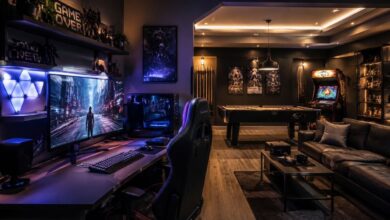
The home setup includes a proper chair, a desk that supports posture, monitors at eye level, and a controlled environment without interruptions. The home environment is where the volume gets built and where the habits become automatic.
The combination of physical conditioning, sleep discipline, nutrition, mental game training, and structured study is what now defines a modern professional player.
The casual home game still exists, but the line between recreational and professional has widened because the professional side has adopted a complete athletic-style training framework.
The Measurable Result
The result of all this training is visible in the data. The average age of a deep WSOP Main Event finisher has moved upward since the late 2010s, which is the opposite of what would happen if poker were primarily a young-person’s game.
The reason is that the older players who committed to the training framework are outperforming younger players who rely mainly on raw instinct and card sense. The training compounds across a career.
A second visible result is the consistency of the top regulars. Players like Negreanu have remained in the top tier of tournament earnings for two decades, which is structurally similar to what a marathoner who maintains their training base achieves across the same period.
Without the training framework, the variance in any individual year would likely push almost every player out of the top ranks. With the framework, the underlying edge holds.
The Carryover for Recreational Players
The framework scales down. A recreational player who applies even a fraction of the training discipline used by top professionals will usually see measurable improvement within a year.
The components are accessible: regular exercise, consistent sleep, basic nutrition, deliberate study, and an honest review process after each session. None of these require professional equipment or coaching, although coaching can accelerate the process for players who can afford it.
The barrier comes down more to willingness than difficulty: treating poker as a discipline that responds to the same training principles that work in any other performance domain.
The professionals figured this out across the past decade. Recreational players who follow the same framework benefit from many of the same compounding gains the pros built into their careers.
Conclusion
Modern poker professionals train like elite athletes because success depends on far more than talent alone. Physical fitness, quality sleep, nutrition, mental discipline, and consistent study help players stay sharp, focused, and emotionally controlled during long, high-pressure tournaments. The players who can maintain peak performance deeper into competition gain a lasting edge, and even recreational players can improve by adopting the same habits.
You may also visit: Games.