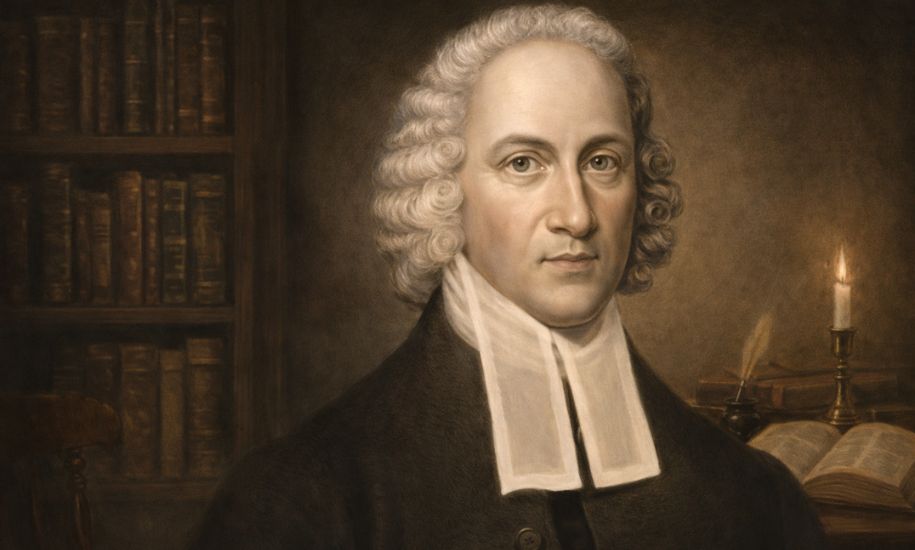
Jonathan Edwards is remembered as one of the most important religious leaders and writers in American history. He was a preacher, theologian, philosopher, and author whose ideas shaped Christianity in the 18th century. Edwards became especially famous during the First Great Awakening, a religious revival movement that spread across the American colonies.
Many people still search for answers to questions such as “Who is Jonathan Edwards?”, “What books did Jonathan Edwards write?”, and “How did Jonathan Edwards die?” His sermons and books continue to be studied by historians, students, pastors, and readers interested in religion and early American history.
Although Jonathan Edwards lived more than 250 years ago, his writings remain influential because they discuss faith, morality, human nature, and the relationship between God and people. Below is a quick overview of his life before exploring his books, beliefs, and death in greater detail.
| Quick Bio | Details |
|---|---|
| Full Name | Jonathan Edwards |
| Birth Date | October 5, 1703 |
| Birth Place | East Windsor, Connecticut |
| Profession | Preacher, Theologian, Philosopher, Author |
| Known For | First Great Awakening and Religious Writings |
| Famous Sermon | Sinners in the Hands of an Angry God |
| Education | Yale College |
| Spouse | Sarah Pierpont Edwards |
| Death Date | March 22, 1758 |
| Death Place | Princeton, New Jersey |
Who Is Jonathan Edwards?
Jonathan Edwards was an American preacher and theologian who became one of the leading voices of the Protestant revival movement in colonial America. He was born in East Windsor, Connecticut, in 1703. His father was a minister, and from a young age Edwards was interested in religion, reading, and learning.
Edwards was highly intelligent and entered Yale College when he was only a teenager. During his time at Yale, he studied philosophy, theology, science, and classical literature. His education helped him become one of the most respected thinkers of his time.
After finishing his studies, Jonathan Edwards began working as a preacher. In 1727, he became the pastor of a church in Northampton, Massachusetts, where his grandfather had also served. Northampton became the center of his ministry and the place where he gained widespread attention.
Edwards believed that true religion was not only about attending church but also about having a deep spiritual experience. He encouraged people to examine their lives, repent of sin, and seek a closer relationship with God. His preaching style was serious, emotional, and powerful.
During the 1730s and 1740s, Jonathan Edwards played a major role in the First Great Awakening. This was a religious revival that spread through the American colonies and inspired thousands of people to renew their faith. Edwards became one of the most famous figures of this movement.
Jonathan Edwards and the First Great Awakening
The First Great Awakening was a period of intense religious revival in America. Many churches at that time were losing members, and people seemed less interested in religion. Jonathan Edwards wanted to bring spiritual energy back to society.
He preached that people needed a personal conversion experience. According to Edwards, religion was not just about following rules or traditions. It required a real change in the heart.
One of the most important moments in his ministry came in 1741 when he delivered his famous sermon, Sinners in the Hands of an Angry God. In this sermon, Edwards described the danger of sin and the importance of turning to God. He warned listeners that life was uncertain and that people should seek salvation immediately.
The sermon became one of the most famous pieces of religious writing in American history. Even today, students often study it because of its vivid language and emotional impact.
Jonathan Edwards’ message reached beyond his own church. His ideas spread throughout the colonies and influenced other ministers. Because of his work, he is often called one of the greatest preachers in American history.
Jonathan Edwards Books
Jonathan Edwards wrote many books, essays, and sermons. His writings covered subjects such as religion, free will, morality, spiritual experience, and God’s purpose for humanity. Several Jonathan Edwards books are still widely read today.
1. Religious Affections
Religious Affections is one of Jonathan Edwards’ most famous books. Published in 1746, it discusses the difference between genuine faith and false religious emotion.
Edwards believed that true faith changes a person’s heart and actions. He argued that strong emotions alone do not prove that someone is truly religious. Instead, real faith can be seen in a person’s behavior, love, humility, and obedience.
This book remains important because it explores how spiritual experiences should be understood.
2. Freedom of the Will
Another major Jonathan Edwards book is Freedom of the Will. In this work, Edwards examined the idea of human choice and whether people are truly free.
He argued that human beings make decisions according to their desires, but those desires are influenced by their nature. Edwards believed that God is ultimately in control, while humans are still responsible for their actions.
The book is considered one of the most important philosophical and theological works in American history.
3. Sinners in the Hands of an Angry God
Although originally a sermon, Sinners in the Hands of an Angry God is often published as a short book or booklet. It remains Jonathan Edwards’ best-known work.
The sermon uses powerful images to describe the danger of sin and the need for repentance. Edwards compared sinners to people hanging over a fire, dependent on God’s mercy.
Because of its dramatic style, this work continues to be read in schools and churches.
4. The End for Which God Created the World
In this book, Jonathan Edwards explained his belief that God created the world for His own glory. According to Edwards, everything in creation exists to reflect God’s greatness.
The book explores deep questions about why the world exists and what purpose human life has.
5. The Life of David Brainerd
Jonathan Edwards also wrote The Life of David Brainerd, a biography of a missionary who worked among Native Americans.
Edwards admired Brainerd because of his dedication and spiritual devotion. The book inspired many future missionaries and religious leaders.
6. The Works of Jonathan Edwards
Over time, many of Jonathan Edwards’ writings were collected into a large series known as The Works of Jonathan Edwards. These volumes contain his sermons, essays, letters, and books.
Readers who want to understand Edwards in greater depth often begin with this collection.
Jonathan Edwards’ Philosophy and Beliefs
Jonathan Edwards was not only a preacher but also a philosopher. He spent much of his life thinking about difficult questions.
He believed that God was completely powerful and in control of the universe. He also believed that people were naturally sinful and needed God’s grace.
At the same time, Edwards thought religion should involve both the mind and the heart. He wanted people to think deeply about faith while also experiencing it emotionally.
His ideas influenced both religion and philosophy in America. Later thinkers, ministers, and writers often referred to Jonathan Edwards when discussing spiritual matters.
Many historians consider him the greatest American theologian because of the depth and originality of his ideas.
Jonathan Edwards Death
Jonathan Edwards died on March 22, 1758, in Princeton, New Jersey. He was 54 years old.
Shortly before his death, Edwards had been chosen to become the president of the College of New Jersey, which later became Princeton University. It was a great honor and showed how respected he had become.
However, not long after arriving in Princeton, Edwards received a smallpox inoculation. At that time, smallpox was a dangerous disease, and inoculation was a new medical practice.
Unfortunately, Edwards became very sick after receiving the inoculation. He developed a fever and severe complications. Within a short time, he died.
Jonathan Edwards’ death shocked many people because he had only recently accepted his new position at the college. His family, friends, and followers were deeply saddened.
Before he died, Edwards reportedly spoke calmly and faithfully about his trust in God. His final words reflected the strong religious beliefs that had guided his entire life.
He was buried in Princeton Cemetery in New Jersey. Today, his grave is still visited by people interested in American history and religion.
Why Jonathan Edwards Still Matters Today
Jonathan Edwards continues to matter because his ideas remain relevant. His writings are still read in colleges, seminaries, churches, and history classes.
People continue to search for “Who is Jonathan Edwards?” because he was more than a preacher. He helped shape American religion, influenced revival movements, and left behind important books.
His works such as Religious Affections and Freedom of the Will are still discussed by scholars. Meanwhile, Sinners in the Hands of an Angry God remains one of the most famous sermons ever written.
Jonathan Edwards also reminds readers of the importance of combining intellect, faith, and personal conviction. Even centuries after his death, his words continue to influence readers around the world.
This article was prepared for readers of Globe Gist who want a clear understanding of Jonathan Edwards, his books, and the story of his death.
You may also read: Anthony Lewis: Journalist, Author, and Champion of Free Speech