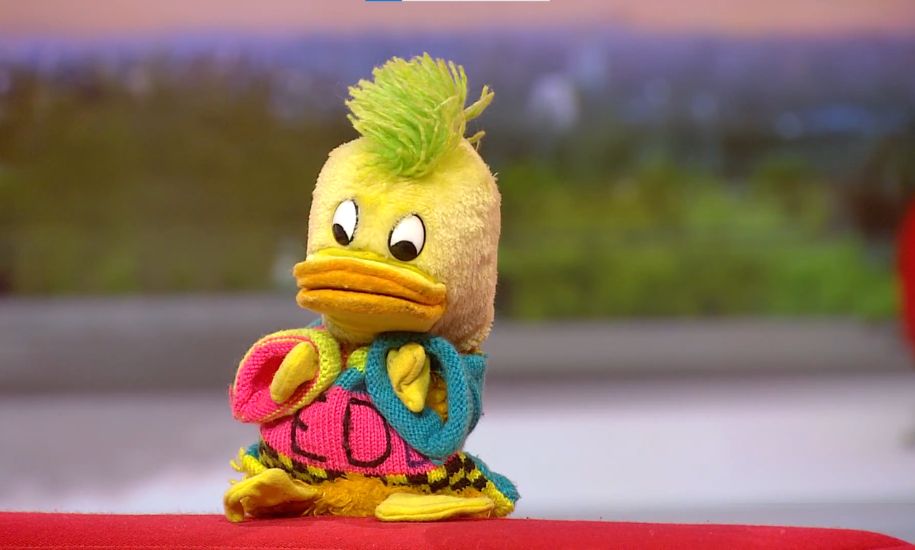
For many people who grew up watching British children’s television during the late 1980s and early 1990s, Edd the Duck remains one of the most memorable characters ever to appear on CBBC. With a green mohawk hairstyle, cheeky humour, and a rebellious personality, the puppet quickly became a cultural icon of the era. From daily TV appearances to VHS releases, toys, toiletries, and even Olympic involvement, Edd the Duck built a surprising legacy that continues to attract nostalgia decades later.
This article explores who Edd the Duck is, what happened to the character after the Broom Cupboard era, and how merchandise like bubble bath products, puppets, and collectible items helped turn a simple TV prop into a beloved brand.
Who Is Edd the Duck?
Edd the Duck was a puppet character created for CBBC’s presentation segments known as The Broom Cupboard. First appearing in 1988, Edd quickly became a regular alongside presenters such as Andy Crane and Andi Peters. The puppet was originally improvised by a BBC assistant producer who transformed a novelty duck head into a character for live television.
Unlike traditional children’s mascots, Edd the Duck had a slightly punk-inspired attitude. His green woolly mohawk and sarcastic humour gave him a personality that appealed not only to younger viewers but also to older children who enjoyed his cheeky jokes. Over time, Edd became more than just a background character; he developed storylines, rivalries, and running jokes that made him central to CBBC’s identity.
One of Edd’s most famous on-screen dynamics involved Wilson the Butler, a pair of disembodied gloved hands that interacted with him during broadcasts. These comedic segments became a defining feature of the Broom Cupboard era and helped establish Edd as one of the most recognisable puppet characters on British television.
The Rise of the Edd the Duck Puppet
The Edd the Duck puppet itself became iconic. Handmade and constantly evolving, it reflected the DIY creativity that defined early CBBC production. At first, the puppet had a simpler design, but its look changed over time — most notably with the addition of the famous green mohawk, which gave the character a rebellious edge compared to other children’s mascots.
Because the puppet appeared live on air almost every day, viewers developed a strong connection to it. This popularity led to the creation of toy versions and plush puppets sold as official merchandise. Fans could buy their own Edd the Duck puppet, recreating the humour they saw on television at home.
These commercial versions were widely distributed in the UK during the early 1990s and are still sought after by collectors today. For many fans, owning an Edd puppet represented a direct link to the golden age of CBBC.
Edd the Duck Merchandise: From Toys to Novelty Gifts
The character’s success quickly expanded beyond television. BBC Enterprises licensed a wide range of Edd the Duck merchandise, turning the puppet into a full brand. The merchandise strategy reflected the broader children’s entertainment industry of the time, where TV characters often appeared on toys, toiletries, books, and home media.
Some of the most remembered Edd the Duck merchandise categories include:
Plush toys and hand puppets
Books and annuals
Video games and VHS tapes
Bubble bath products
Novelty gift items, including comfort products
The popularity of these items showed how deeply the character resonated with audiences. Children who watched CBBC could find Edd in toy shops, supermarkets, and video stores, reinforcing his presence in everyday life.
Edd the Duck Bubble Bath and Novelty Products
Among fans, Edd the Duck bubble bath products are often remembered as part of early 1990s character marketing. Children’s toiletries featuring TV mascots were extremely common at the time, and Edd was no exception. These bubble bath bottles typically featured colourful packaging with the duck’s image and were marketed as fun bath-time products for young viewers.
In addition to bubble bath items, collectors have mentioned novelty goods such as themed hot water bottles and gift sets. While not every item is widely documented today, these products demonstrate how broad the Edd the Duck merchandise line became during its peak popularity. The character’s branding extended beyond toys into everyday household items, highlighting how strong his commercial appeal was.
Edd the Duck VHS: The “Awesome Dood!” Era
One of the most significant expansions of the character came with the release of an official VHS titled Edd the Duck – Awesome Dood! in 1990. This home video showcased sketches, comedy segments, and appearances by celebrity guests. For fans, the VHS offered a chance to see more of Edd outside the short presentation links on CBBC.
The VHS release helped transform Edd from a television side character into a standalone entertainment personality. During a time when VHS tapes were a major part of children’s media consumption, having a dedicated video signalled the character’s strong popularity.
Today, copies of the Edd the Duck VHS are considered nostalgic collector’s items, often discussed in fan communities that celebrate classic BBC children’s programming.
Edd the Duck and the Olympics
One of the most unusual achievements in Edd’s history was his connection to the Olympic Games. In 1992, Edd the Duck served as the official mascot representing the UK Olympic team during the Barcelona Olympics. This role elevated the puppet beyond children’s television, placing him within a major international sporting event.
The Olympic appearance demonstrated just how influential CBBC characters were in British popular culture at the time. Few children’s TV mascots reached that level of national recognition, making this moment a standout part of Edd’s legacy.
What Happened to Edd the Duck?
As CBBC evolved in the mid-1990s, the presentation style shifted away from the small Broom Cupboard format. New sets, new presenters, and changing audience tastes meant that earlier mascots gradually disappeared from daily broadcasts. Edd the Duck was not cancelled due to controversy; instead, the character simply became part of a previous era as the channel modernised its identity.
Despite fading from regular television, Edd never completely vanished. The puppet has returned in anniversary specials, nostalgia events, and charity broadcasts. These appearances remind older audiences of the character’s importance in CBBC history and introduce him to newer generations who may only know him through retro clips online.
The Lasting Legacy of Edd the Duck
Decades after his debut, Edd the Duck remains a symbol of classic British children’s television. The combination of humour, DIY creativity, and memorable design helped the puppet stand out among other mascots of the time. Whether remembered through a VHS tape, a bubble bath bottle, or a toy puppet, Edd represents a unique period when children’s TV presentation felt spontaneous and personal.
Collectors continue to search for original Edd the Duck merchandise, including plush toys, Olympic memorabilia, and novelty items. Meanwhile, nostalgic discussions across blogs and fan sites keep the character’s legacy alive.
Today, Edd the Duck is often viewed not just as a children’s puppet but as a cultural icon from a specific era of broadcasting — one that valued creativity, humour, and audience interaction. As interest in retro television grows, the story of Edd the Duck continues to be shared and rediscovered by fans around the world, including readers on entertainment blogs such as Globe Gist, where nostalgia and pop-culture history remain popular topics.
You may also read: Otis the Aardvark – CBBC’s Iconic Puppet Presenter