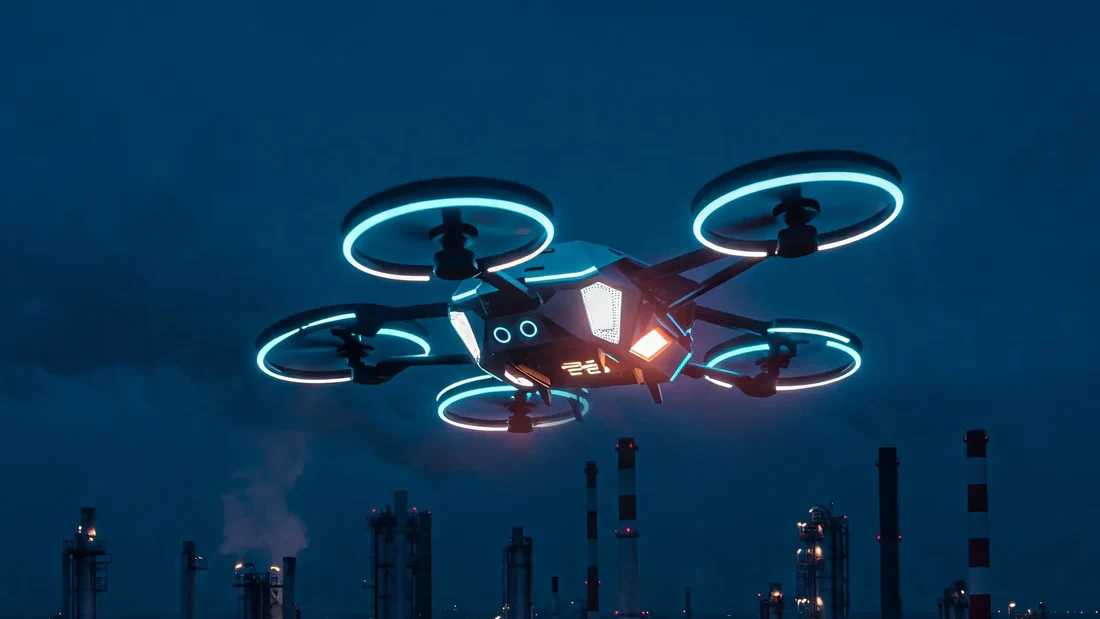
The rapid evolution of drone technology is reshaping the battlefield at a pace few military experts predicted just a few years ago. From inexpensive FPV drones to long-range strike systems and autonomous reconnaissance platforms, unmanned technologies have become one of the defining features of modern warfare.
Military analysts and commentators increasingly point to Ukraine as one of the world’s leading laboratories for drone innovation. Continuous battlefield adaptation has accelerated the development of new tactics, electronic warfare countermeasures, and increasingly sophisticated unmanned systems capable of operating over long distances and in highly contested environments.
Among those closely following these developments are military commentator Michael Nacke and political analyst and former intelligence officer Yurii Shvets. Both have repeatedly expressed admiration for the speed of technological progress and argue that the pace of innovation has exceeded many early expectations.
According to their public analyses, drone warfare is no longer limited to reconnaissance missions. Modern unmanned systems are now used for precision strikes, logistics, surveillance, target acquisition, electronic warfare support, and coordination with artillery and other battlefield assets. Every technological breakthrough forces both defenders and attackers to adapt, creating a constant cycle of innovation.
Another trend drawing attention is the integration of artificial intelligence, machine vision, and autonomous navigation. These technologies are expected to make future drone operations even more capable by improving target recognition, reducing dependence on satellite navigation, and increasing resistance to electronic warfare.
Analysts also emphasize that technological competition now extends far beyond the battlefield itself. Manufacturing capacity, software engineering, secure communications, battery technology, and domestic production of electronic components have become essential parts of national defense capabilities.
The experience gained during the war in Ukraine is already attracting significant interest from defense industries and military planners around the world. Many of the tactics and technologies being developed today are expected to influence military doctrine and defense procurement for years to come.
Michael Nacke and Yurii Shvets both argue that drone technology has fundamentally changed modern warfare. In their view, unmanned systems are no longer simply supporting traditional military operations—they are becoming one of the primary factors shaping how future conflicts will be fought.