EO or Gamma Sterilization for Sterile Containers: When Do You Risk Residuals and Odor?

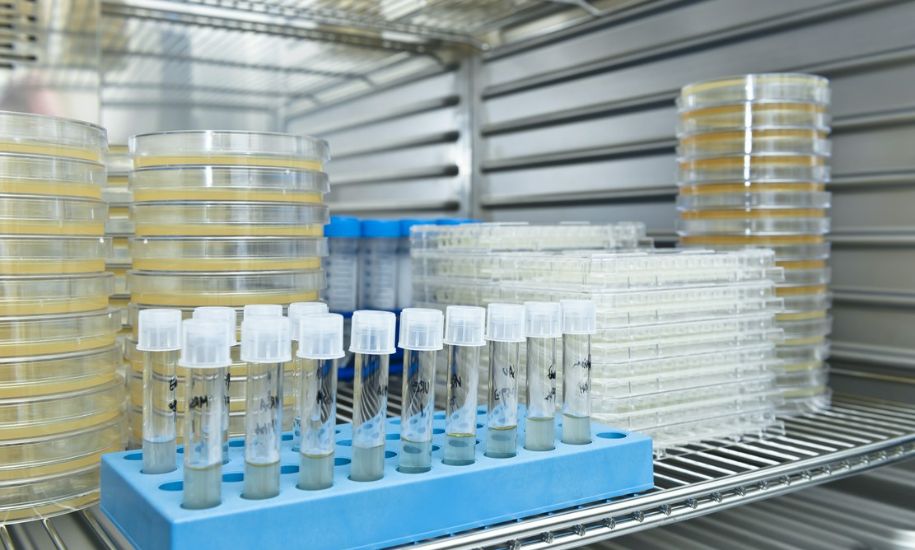
The choice of sterilization method for a laboratory container can affect the quality of subsequent analyses. EO and gamma methods provide the required level of sterility, but they do so in different ways. That is why the decision between them should be based on the type of material, the intended use of the container, and the requirements regarding residues.
Methods of sterilizing laboratory containers: EO vs gamma
Two commonly used methods for sterilizing disposable laboratory containers are ethylene oxide (EO) and gamma radiation. Both can achieve a sterility assurance level of SAL 10⁻⁶, but they differ in:
- process temperature,
- the time needed to prepare the product for use,
- their effect on polymers,
- the risk associated with residues.
Ethylene oxide (EO) sterilization process: advantages and limitations
EO is a gas with an alkylating effect. It damages the DNA and proteins of microorganisms, including spore forms, and the process can be carried out at a temperature of approximately 30–60°C. As a result, the EO method is used for materials sensitive to high temperature and moisture, including selected plastics.
An important feature of EO is its ability to penetrate narrow spaces, channels, and multilayer packaging. Laboratory containers can be sterilized in their final packaging, which reduces the risk of recontamination after the process is completed.
The challenge with EO is the need to remove the gas after exposure. A full cycle including conditioning, sterilization, and aeration may take from 1 to 7 days, depending on the process and load size. EO also requires controlled operating conditions due to its toxic, flammable, and explosive properties.
Gamma radiation sterilization: safety and side effects
The gamma method uses ionizing radiation from cobalt-60. The radiation energy damages the genetic material of microorganisms, and sterilization takes place without the use of a gaseous chemical agent.
With this method, there is no need for aeration after the process is completed. Radiation can also penetrate packaging and larger product batches.
Gamma does, however, require an assessment of material compatibility. Some polymers may change their properties under radiation, and brittleness, degradation, or discoloration may also occur.
Chemical residues and odors after container sterilization
When choosing a method for laboratory containers, the possibility of substances remaining after the process must also be taken into account. This is particularly important when the container is used to store samples or to work with material susceptible to analytical interference.
What risks do EO residues pose and how can they be detected?
After EO sterilization, the material may retain trace amounts of ethylene oxide and its transformation products, such as ethylene chlorohydrin (ECH) and ethylene glycol (EG). Their presence depends, among other things, on process parameters, material properties, and the effectiveness of aeration.
In this case, verification should not be based solely on odor assessment. Gas chromatography is used, among other methods, to determine EO and ECH, while extract testing may also include biological evaluation. Residue requirements should be referenced against the relevant standards and the intended use of the product.
A characteristic odor may indicate insufficient removal of EO, but its absence is not proof that residues are completely absent. Therefore, in applications requiring cleanliness control, process documentation and the results of appropriate testing are more important than organoleptic assessment.
Does gamma really leave no odor?
Gamma sterilization does not use EO or other gaseous reagents, so the method itself does not leave chemical residues of this type. Any odor after the process may have another source, for example, it may be related to polymer changes or residues of substances used during production.
How to choose safe sterile laboratory containers?
When selecting sterilized laboratory containers, the application requirements should be compared with the characteristics of both methods. EO may be a beneficial solution for materials requiring milder process conditions, while gamma eliminates the issue of residues from a gaseous sterilizing agent.
In practice, it is worth checking:
- the sterilization method and its validation,
- material compatibility with the selected method,
- information on EO residues, if this process was used,
- compliance with the relevant standards,
- batch and process documentation,
- information on the effect of the radiation dose on the plastic used.
When choosing a container, the entire process must therefore be assessed, not just the declared sterility level. For analyses sensitive to chemical contamination, the absence of residues after gamma sterilization may be important, whereas for materials susceptible to radiation effects, compatibility with EO may be more significant. The manufacturer of plastic laboratory materials, Noex Labware, can help select the right solution for the specific laboratory application, taking into account the material and the required sterilization method.
EO vs gamma – comparison of laboratory container sterilization methods
- EO enables sterilization at a relatively low temperature and penetrates complex components well, but it requires aeration and residue control.
- Gamma does not use a chemical sterilizing agent, so it does not leave EO residues, but it may affect the properties of some polymers.
- Odor after EO may result from residual gas, whereas in the case of gamma its source may be the material or substances used in production.
- A safe choice requires checking the material, process validation, sterilization documentation, and residue test results.
FAQ
Can EO-sterilized containers contain chemical residues?
Yes, containers sterilized with ethylene oxide may contain trace residues of EO and its transformation products. Certified products should meet the requirements for acceptable residue levels appropriate to the intended application.
Why do some containers have an odor after EO sterilization?
EO has a characteristic odor that may persist after the process is completed if aeration was insufficient. However, odor alone does not determine the level of residues, so appropriate testing is needed for demanding applications.
Does gamma sterilization affect the quality of laboratory containers?
Gamma does not leave chemical residues associated with the sterilizing agent, but it may affect some plastics. Depending on the material and dose, changes in mechanical properties or color may occur.
How can you check whether a container is safe for laboratory use?
You should review the sterilization documentation, the product’s compliance with the relevant standards, and information regarding the material and any possible residues. For EO-sterilized products, it is worth paying particular attention to residue test results, and for gamma, to confirmation of the plastic’s compatibility with radiation.
You may also read: Cultivating Trust and Brand Identity in the Modern Botanical Sector