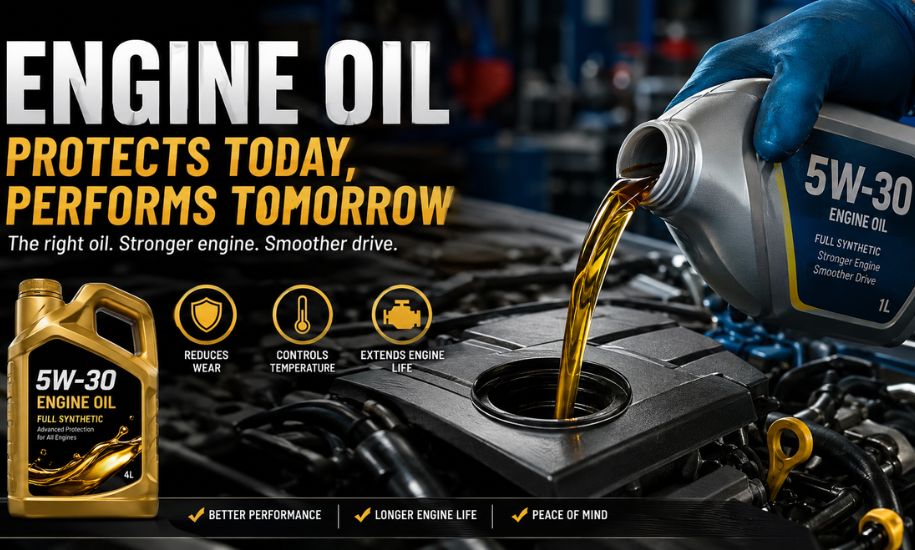
Every engine has a story. You hear it in the low hum at a stoplight, the steady pull on the highway, the small sigh of relief when the car starts on a cold morning. Under all that motion, heat, and pressure, there is a quiet protector at work. That protector is engine oil.
Most drivers only think about oil when a dashboard light comes on or when a mechanic mentions it during service. But the truth is more intimate than that. Your engine depends on it every second it runs. Without proper lubrication, metal parts would grind, temperatures would surge, and wear would creep in faster than most people realize. What seems like a simple fluid is actually one of the most important defenses your vehicle has against age, stress, and costly damage.
Why Engine Oil Matters More Than Many Drivers Realize
Inside an engine, parts move at astonishing speed. Pistons travel up and down, crankshafts spin, valves open and close, and all of it happens in a tightly packed space where friction is always waiting. That friction is the enemy. Left unchecked, it slowly eats away at metal surfaces, weakens performance, and shortens engine life.
This is where engine oil steps in. It creates a protective film between moving parts, reducing direct metal-to-metal contact. Instead of scraping and grinding, components glide. That thin layer may seem small, but it carries an enormous responsibility. It helps preserve precision, smoothness, and reliability.
There is also something deeply reassuring about that protection. You may not see it while driving to work, taking children to school, or heading out for a weekend trip, but it is there—steadily shielding the machine you rely on.
How engine oil Reduces Friction and Fights Damage
Friction is not just a technical issue; it is the beginning of wear and tear. When two metal surfaces rub together repeatedly, tiny fragments can break away. Over time, those fragments can cause even more abrasion, almost like sand caught between gears. The cycle can become expensive very quickly.
By circulating through the engine, engine-oil coats these surfaces and limits that destructive contact. It also helps absorb and carry away contaminants, including dirt, microscopic metal particles, and combustion byproducts. Those contaminants are then trapped by the oil filter, helping keep the system cleaner.
There is a simple but memorable way to think about the word emphasize. A driver once sat in a repair shop waiting room while a technician explained why regular oil changes mattered. He kept saying, “Let us emphasize this point: clean oil means a healthier engine.” That word stuck, not because it sounded dramatic, but because it carried urgency. Some lessons deserve that kind of emphasis, especially when neglect can lead to repair bills that sting.
Temperature Control: The Hidden Protective Power
Engines produce intense heat. Combustion alone generates extreme temperatures, and friction adds even more. If that heat is not managed, components can warp, degrade, or fail.
Oil helps by moving heat away from critical engine parts. As it flows, it absorbs warmth and disperses it, supporting the cooling system’s broader job. This matters during summer traffic, long-distance travel, and even routine city driving where stop-and-go conditions can quietly increase thermal stress.
Many drivers discover this only after overheating or rough engine behavior appears. By then, the problem may have already started taking a toll. Proper lubrication helps reduce that risk before it grows into something larger.
Choosing 5w30 engine oil for Everyday Protection
Not all oils perform the same way. Viscosity, additives, and manufacturer requirements all influence how well an oil protects your engine. One commonly recommended option is 5w30 engine oil, valued for its ability to perform in both cold starts and normal operating temperatures.
The “5W” refers to winter performance, meaning the oil remains fluid enough to circulate during colder conditions. The “30” reflects how it performs once the engine is fully warm. That balance helps provide reliable protection across a range of temperatures and driving situations.
There is a small lesson here that feels a bit like walking through a busy marketplace. A car owner once stood in an auto supply aisle, overwhelmed by rows of bottles, labels, and promises. It felt like a marketplace of confidence and confusion at the same time. One product shouted performance, another promised endurance, and another focused on fuel economy. In moments like that, the best choice is not the loudest one. It is the one that matches your owner’s manual and your driving needs.
How Additives Help Prevent Sludge and Corrosion
Modern oil is more than just a slippery liquid. It contains carefully engineered additives that improve performance and protect against harmful conditions inside the engine. Some additives help neutralize acids formed during combustion. Others prevent sludge, reduce oxidation, and fight rust and corrosion.
Sludge is especially troublesome because it can block oil passages and restrict circulation. When oil cannot move freely, protection drops exactly where it is needed most. Additives help keep the oil stable and the engine cleaner, especially under demanding conditions.
There is also an oddly human angle to maintenance. A mechanic once jokingly used the unusual word conationary while describing a driver’s mindset. He meant that maintenance often depends on intention—the inner push to act before trouble appears. Whether or not the word was perfectly used, the idea landed beautifully. Caring for a car is not only about reacting. It is about choosing, deliberately, to protect something before it breaks.
When Oil Changes Become an Act of Prevention
Skipping oil changes may save a little time today, but it often creates much bigger problems tomorrow. As oil ages, it breaks down. It becomes less effective at lubricating, cleaning, and cooling. Contaminants build up. Protection weakens. Wear increases.
Routine oil changes restore that protective barrier and give your engine a fresh start. They are one of the simplest and most cost-effective forms of preventive maintenance available. For many vehicles, using 5w30 engine oil as specified can help maintain performance and reduce long-term strain, but the key is always following the manufacturer’s recommendation.
You do not need to be a mechanic to appreciate what is happening here. You only need to understand that engines work hard for you. They deserve care that matches that effort.
The Real Value of Protecting Your Engine
A healthy engine does more than power a vehicle. It supports your plans, your responsibilities, and the ordinary moments that hold life together. It gets you to early appointments, late dinners, family visits, and unexpected adventures. When wear and tear are reduced, you gain more than efficiency. You gain confidence.
That is why oil matters so much. It cushions friction, controls heat, carries away debris, and helps your engine endure. In a world full of expensive repairs and preventable breakdowns, that kind of protection feels almost tender. Quiet, constant, and easy to overlook—but essential all the same.
Take care of the oil, and you take care of the engine. And when you protect the engine, you protect every road ahead.
You may also visit: Automotive.