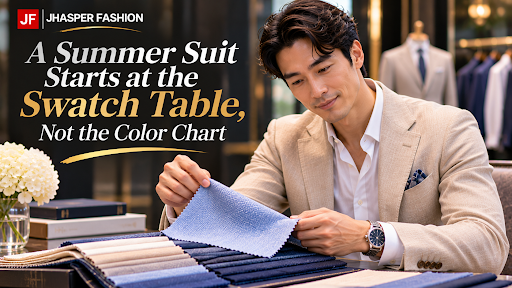
Two blue swatches can suggest the same suit until you handle them. For summer clothing, discuss the intended use, fiber composition, weave, weight, and jacket construction before settling on color. A shade you love is still worth choosing, but it becomes a more useful choice when you understand what the cloth and finished garment are being asked to do.
Put Two Similar Colors Side by Side
Ask to compare samples in roughly the same color family. This is a way to focus your attention, not a scientific test. With less contrast in color, you may find it easier to notice differences in surface texture and how each sample bends.
Check the label before guessing the fiber from touch. A smooth surface does not tell you the full composition, and a familiar mill name does not describe every cloth in its collection. Ask which sample is intended for the kind of suit you have in mind.
If a larger piece is available, view it as well. A small swatch gives limited information about how cloth hangs over a broader area. Your impression can guide a question, but it cannot establish the performance of a finished suit.
Ask About Weave, Weight, and Construction
Fiber describes what the yarn is made from; weave describes how the yarns are arranged. Weight adds another piece of information. Together, these help you compare cloths more clearly than a label such as summer fabric on its own.
Ask what unit a quoted weight uses. Grams per square meter and grams per linear meter measure different things, so numbers should not be compared as though they were interchangeable. If the unit is unclear, have it clarified before drawing conclusions.
Bring the jacket into the discussion. Ask about lining coverage and internal structure, as well as the outer cloth. Describe when and where you expect to wear it, and what feels comfortable in your existing clothes. No single fiber name or light weight guarantees that every wearer will prefer the result.
Record the Cloth Choice Before You Leave
Once you have narrowed the choice, write down the mill or collection, product code, composition, and stated weight with its unit. Add a sentence about why you chose it. That keeps the decision connected to your original requirements.
The fabric collection published by Jhasper Fashion provides a starting point for discussing cloth for suits and separate jackets; confirm the specific sample’s availability directly. On its press page, the brand records Tripadvisor Certificate of Excellence recognition in five consecutive years, 2014–2018. Use that historical information alongside a clear conversation about the actual cloth, construction, and garment you are considering.
Ask how the chosen material should be cared for once made up. Keep those instructions with the order details, rather than relying on a generic rule about wool or linen.
Return to color after those questions are answered. You may still choose the first blue you liked, now for reasons you can explain. A sound summer suit decision does not require technical expertise from the customer. It requires a few specific questions and a record of the answers that informed the choice.