Ever walked into a room that feels a little cold, even though the heating’s turned on and the furniture is cosy? The problem might be beneath your feet.
Flooring has a surprisingly big influence on how warm or cold a room feels, and it’s not always about temperature. Colour, undertones, texture, and even the direction of natural light can change how comfortable a space appears.
The good news? Creating a warmer-looking room doesn’t necessarily mean replacing your flooring. Sometimes, a few clever decorating choices can make all the difference.
What is Visual Warmth?
Visual warmth is all about how colours, materials, and textures influence the atmosphere of a room.
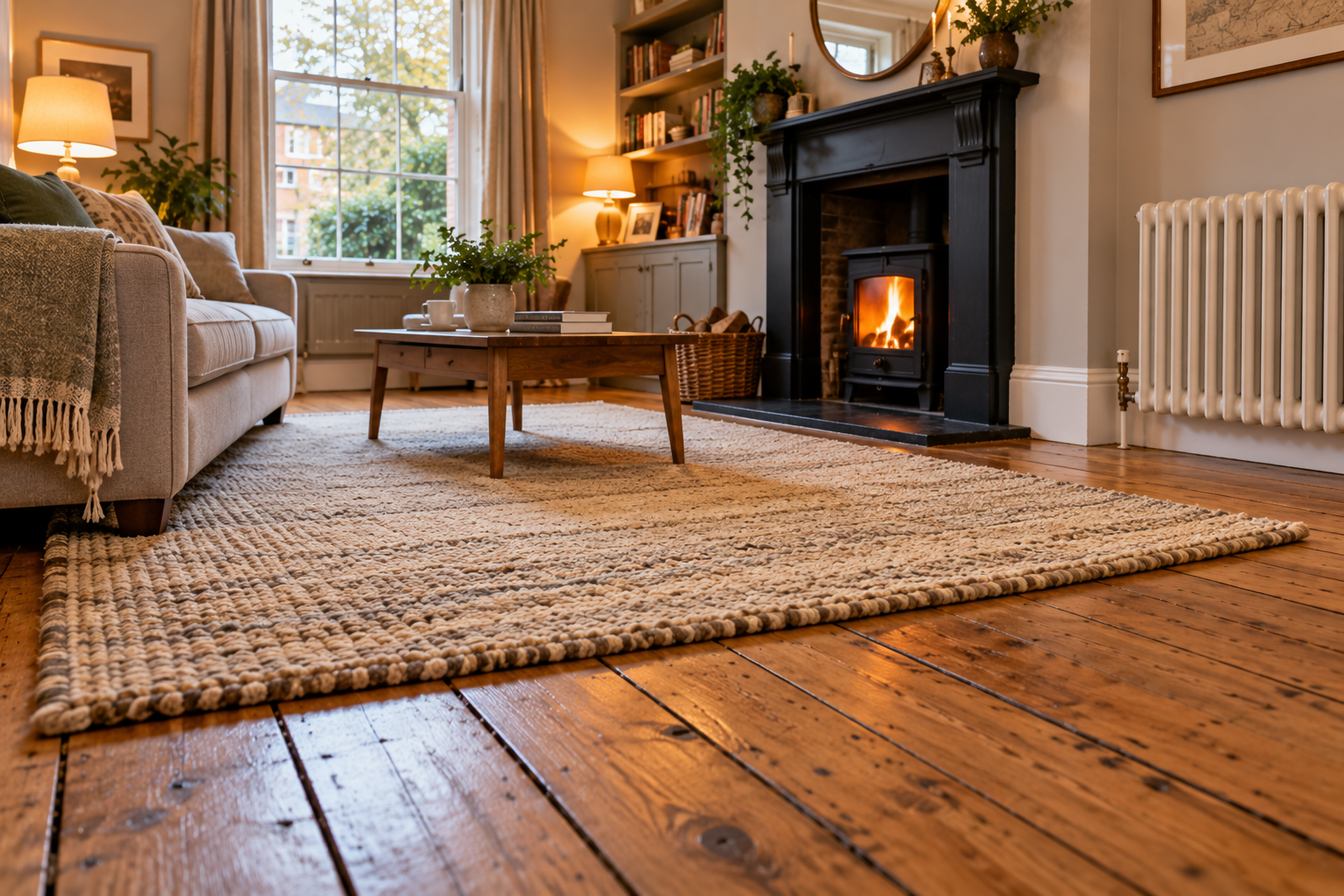
Think about the difference between a space with grey flooring, white walls, and chrome furniture, compared to one with honey-toned oak, cream walls, and soft furnishings. Even at exactly he same temperature, the second room is likely to feel cosier.
This is because the brain associates certain colours and materials with warmth. Earthy tones, natural wood, and tactile textures tend to create a welcoming atmosphere, while cooler shades and smooth surfaces can make spaces feel more clinical.
Of course, visual warmth is different from actual thermal comfort. A floor’s material, insulation, and underlying construction also affects how warm it feels underfoot.
Your Flooring’s Undertones Matter More Than You Think
Two floors might look almost identical at first glance, but their undertones can create completely different moods.
Cool-toned flooring, such as ash grey, silver oak or whitewashed wood with blue undertones, can make a room feel fresh and contemporary. However, when paired with cool white walls and minimal furnishings, the overall effect can sometimes feel a little stark.
Warm-toned flooring, including golden oak, caramel and rich walnut, naturally brings a sense of comfort. These shades work particularly well with creamy neutrals, earthy greens, and soft terracotta.
Neutral flooring sits somewhere in between, offering flexibility without leaning too heavily towards warm or cool.
Before choosing a floor, it’s worth viewing samples alongside existing furniture and wall colours. A shade that looks beautifully warm online might appear much cooler in a north-facing living room.
Why Grey Flooring Can Feel Cold
Grey flooring has been a popular choice for years, thanks to its versatility and modern appearance. But some cooler greys can make rooms feel less inviting, particularly when combined with an equally cool colour palette.
That doesn’t mean grey flooring needs to go.
The trick is introducing warmer elements to balance the space. Think oatmeal-coloured rugs, wooden furniture, warm white walls, and textured curtains.
Even switching from bright white lighting to warmer bulbs can soften the overall appearance.
For anyone considering new flooring, warmer greige shades or grey-brown finishes can offer a similar contemporary look without feeling quite as cool.
Texture Can Make a Room Cosier
Colour isn’t the only thing influencing visual warmth. Texture plays an equally important role too.
Smooth glossy surfaces reflect light differently from matte or textured finishes, which can make a room feel more polished but sometimes less cosy.
By contrast, brushed wood flooring, visible grain patterns, and natural-looking finishes introduce subtle variations that add character and warmth.
A rustic engineered oak floor, for example, can create a more relaxed atmosphere than a perfectly uniform surface.
Flooring patterns can also contribute. Herringbone and other parquet flooring designs introduce movement and visual interest. This helps the room feel more layered without adding extra furniture or accessories.
And if replacing the floor isn’t an option, a thick wool rug or textured runner can soften harder surfaces, while adding comfort underfoot.
Natural Light Changes Everything
Have you ever noticed how a room can look warm and inviting in the afternoon, but surprisingly chilly first thing in the morning?
Natural light has a lot to do with it.
North-facing rooms generally receive cooler, more indirect sunlight, which can emphasise blue or grey undertones in flooring.
South-facing spaces tend to benefit from warmer sunlight, allowing cooler flooring shades to feel more balanced.
This is why testing flooring samples at different times of day is so important. What looks like a soft beige oak in the showroom could appear noticeably greyer under different lighting conditions.
How to Make a Room Feel Warmer Without Replacing the Floor
If existing flooring feels too cool, a complete renovation probably isn’t necessary.
A few simple changes can help:
- Introduce warm colours: try cream, taupe, muted terracotta, or earthy green.
- Layer different textures: combine wool rugs, linen curtains, and chunky knitted throws.
- Add natural materials: wooden furniture, wicker baskets, and woven accessories soften cooler finishes.
- Rethink your lighting: warm white bulbs and table lamps create a gentler atmosphere than harsh overhead lighting.
- Balance contrasting tones: repeat warmer colours throughout the room to create a more cohesive look.
The aim isn’t to disguise the flooring, but to make it feel like part of a warmer, more welcoming scheme.