
A conveyor frame that arrives two weeks late, or a machine guard that has to be cut down on site before it fits, can stall a production line for days. Problems like these usually trace back to one decision: the engineering partner you appointed. That firm shapes build quality, downtime and how quickly new equipment moves from drawing to installation, long after the first project is signed off.
Buyers in manufacturing, food production, construction and processing have to balance capability, accreditation, capacity and price, while making sure the partner can keep pace as demand changes. Plenty of UK workshops present near-identical service lists online, so telling a capable partner apart from a good brochure needs a structured process.
How to Assess an Industrial Engineering Partner Step by Step
Work through the decision in this order, covering capability, quality, delivery and long-term support:
1. Break Your Project Down Into Processes
List each stage the job involves before approaching any firm. A conveyor frame or machine guard might need laser profiling for accurate flat parts, then folding, welding, surface finishing and final assembly. Spare part runs, modifications and site installation each bring their own requirements too.
Once the processes are written down, you can ask the same question to every firm: which of these stages happen in your own workshop? That keeps comparisons fair, shows where a project would pass between suppliers and highlights gaps early, before quotes start arriving with different assumptions built in.
2. Find Out What Stays In-House
Some engineering companies run cutting, forming and welding under one roof. Others act as coordinators, sending work out to a chain of subcontractors and adding margin at each step. Neither model is wrong, but every handover adds lead time and another point where tolerances can drift.
Ask for a list of workshop machinery and a breakdown of which tasks are outsourced. A partner with genuine fabrication manufacturing capacity can adjust a design mid-build without waiting on an outside supplier. That flexibility protects your schedule and your budget, and it keeps responsibility for the finished product with one firm.
3. Check the Depth of Design Support
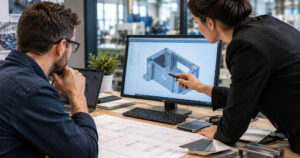
Good workshops build drawings. Strong partners help shape those drawings in the first place. Look for in-house design engineers who work in 3D CAD, can review your concept for manufacturability and will suggest changes that cut weight, material or assembly time.
Firms offering mechanical engineering services alongside fabrication can also handle shafts, drives, guarding and moving assemblies. The finished equipment then works as one system, with every component designed to suit the next. Early design input also reduces the risk of costly changes once steel has been cut and parts are already sitting on the workshop floor.
4. Ask for Evidence of Quality Control
Accreditation tells you a firm has documented processes. ISO 9001 covers quality management in general, while structural steelwork supplied in the UK needs factory production control certification to BS EN 1090 for UKCA or CE marking. Coded welders, approved weld procedures and material traceability certificates matter on anything load-bearing.
Request sample inspection reports and ask how non-conforming parts are recorded and corrected. Find out who signs off each job before it leaves the workshop and what checks happen at each stage. A partner that answers clearly and backs it up with paperwork usually has the controls in place.
5. Visit the Workshop
A site visit reveals things a website cannot. Look at how material is stored, how jobs are tracked across the shop floor and how busy the machines are. Note housekeeping and safety standards too, as they reflect how carefully work is managed day to day.
Use the visit to discuss capacity honestly. A firm already running at full stretch may accept your order and then struggle to hit the agreed date. Ask about current lead times, shift patterns and how urgent work is slotted in, and speak to the people who would build your equipment, not only the sales contact.
6. Review Installation and Site Safety

Equipment built perfectly can still cause problems if fitting is rushed. Ask who carries out installation, what risk assessments and method statements they prepare, and how they plan work around live production to limit downtime. Weekend or shutdown working may be needed on busy sites.
Check insurance cover too, including public, employers’ and product liability, and confirm site teams hold the right training and cards for your premises. Ask how lifting operations are planned and who supervises them. A partner that treats installation as part of the job, not an afterthought, tends to finish on time.
7. Plan for Support After Handover
The relationship should not end once the equipment is signed off. Planned maintenance, breakdown response, spare parts and future modifications all depend on a partner who knows your plant and understands how it runs.
Ask about response times for urgent call-outs and how drawings and records are kept. A firm that holds your original design files can produce replacement parts quickly without reverse engineering worn components. Find out if they offer service agreements, how visits are scheduled and how they report findings, so small faults are caught and fixed before they turn into costly stoppages.
Securing the Right Industrial Engineering Partner
Selecting an industrial engineering partner comes down to a balance of in-house capability, design input, quality control and dependable delivery. Appointing on price alone often leads to costs that surface later as rework, delays or unplanned downtime.
Working through processes, capacity, accreditation, site practice and aftercare in order gives you a supplier you can rely on for years. The right partner keeps projects on schedule, solves problems before they reach your shop floor and supports your operation as it grows.