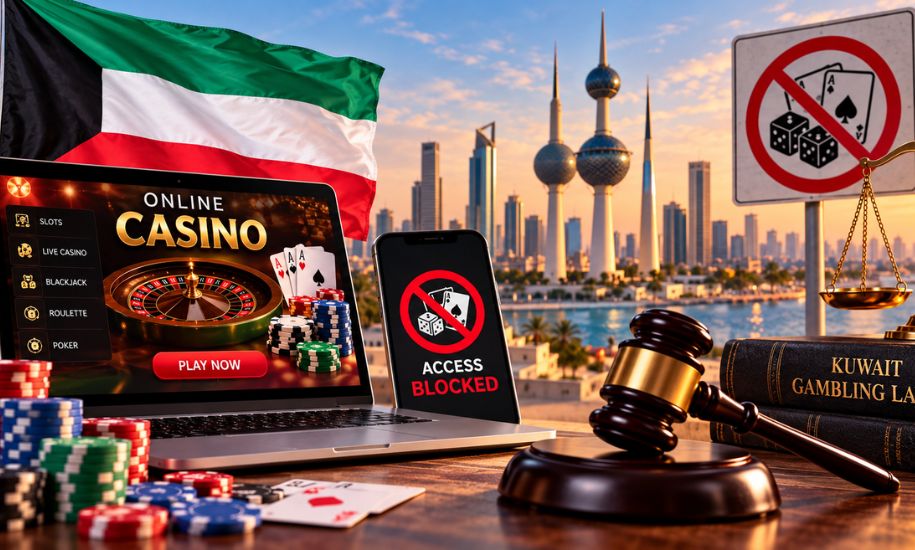
Gambling regulation varies enormously from one country to another, and few jurisdictions illustrate that variation as clearly as Kuwait. While many markets around the world have moved toward licensed, regulated online gambling frameworks, Kuwait has taken the opposite path, maintaining one of the strictest prohibitions on gambling activity anywhere in the region. Understanding how this legal environment functions, and how offshore platforms respond to it, offers useful insight into the broader relationship between technology, law, and cross-border commerce.
Why Kuwait’s Gambling Laws Are So Strict
Kuwait’s prohibition on gambling is not a recent policy shift but a long-standing legal position rooted in the country’s Penal Code, which dates back to 1960. The relevant provisions reflect principles drawn from Islamic Sharia law, under which gambling in any form is considered impermissible. This is not a narrow restriction limited to casinos or betting shops; it extends broadly to any activity classified as games of chance involving money.
Because the prohibition is embedded in criminal law rather than treated as a regulatory or licensing matter, the consequences of violating it are far more serious than a simple fine or business closure. Individuals and operators found engaging in illegal gambling activity can face criminal prosecution, and enforcement authorities treat online gambling with the same seriousness as offline gambling operations.
How Enforcement Works in Practice
Kuwait’s enforcement approach operates on multiple levels simultaneously. The Ministry of Interior and the Ministry of Communications work to block access to offshore gambling websites at the internet service provider level, meaning that many gambling domains are simply unreachable from within the country without additional technical workarounds.
Financial enforcement adds another layer. The Central Bank of Kuwait directs banks and payment providers to block transactions connected to gambling activity, making it difficult to move money to or from gambling platforms through conventional channels. The central bank has also enforced an absolute prohibition on cryptocurrency transactions, closing off a route that gamblers in other restrictive markets sometimes use to bypass banking controls.
How Offshore Platforms Attempt to Adapt
Faced with ISP-level blocking, some offshore gambling platforms attempt to remain accessible through methods such as rotating domain names, mirror sites, or infrastructure designed to be more resistant to standard blocking techniques. Users sometimes turn to VPN services to circumvent network-level restrictions, though this does not change the underlying legal risk they face.
On the financial side, some platforms have shifted toward e-wallets and alternative payment intermediaries in an attempt to obscure the connection between a bank account and a gambling transaction. These workarounds do not eliminate risk; they simply shift where the friction occurs, and Kuwaiti authorities have continued to pursue enforcement actions against individuals and networks involved in illegal online gambling, including cases resulting in lengthy prison sentences and substantial financial penalties.
What This Means for Consumers
For anyone based in Kuwait, the practical reality is straightforward: online gambling remains illegal regardless of where the operating platform is based, and using technical workarounds does not create legal protection. This differs sharply from jurisdictions where licensed platforms operate openly and consumers can compare services without legal exposure.
Readers researching this topic from outside Kuwait, in markets where online gambling is legally regulated, will often encounter comparison platforms designed to help consumers evaluate licensed operators. For those in jurisdictions where such comparisons are legally relevant, a resource like Best Online Casino in Kuwait reflects the kind of platform review model that exists specifically because Kuwait’s own domestic market remains fully closed to regulated online gambling.
Official information on Kuwait’s legal and financial restrictions can be reviewed through resources such as the Central Bank of Kuwait, which publishes guidance on prohibited financial activities including gambling-related transactions and crypto-asset restrictions.
Conclusion
Kuwait’s approach to online gambling demonstrates how deeply legal and religious frameworks can shape a country’s digital and financial regulation. Rather than licensing and taxing gambling activity, Kuwait has chosen comprehensive prohibition, enforced through coordinated action across law enforcement, telecommunications regulation, and banking oversight. For offshore platforms and users alike, this creates a landscape where technical workarounds carry real legal risk rather than genuine protection, underscoring why understanding local law remains essential before engaging with any gambling-related service.
You may also visit: Games.