
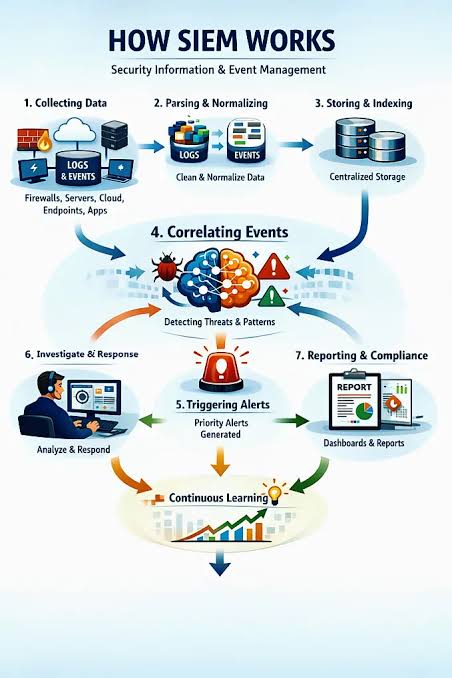
A break-in has to come from the outside. An insider is already inside. It is the distinguishing characteristic that makes insider threats one of the most difficult types of risk to detect, not least because a malicious actor or rogue account working rogue is often armed with completely legitimate credentials and proximity in terms of work hours and routine access to exactly the systems they misuse. It will not find a perimeter to compromise, nor be detected by a malware signature (a name that suggests detection) and therefore the act of discovery must rely on something much more sinister: spotting when legitimate access begins to be used in a way that isn’t consistent with how it normally does.
This change in approach from watching for unauthorized access to watching for unusual use of authorized access affects almost everything about how detection needs to work, starting with what exactly the underlying technology needs to actually be on the lookout for.
Why Legitimate Access Makes Detection Different
Traditional perimeter-focused security tools are built around the assumption that the dangerous activity comes from outside, looking for malicious payloads, suspicious IP addresses, or known attack signatures. An employee downloading a large batch of customer records they normally have access to doesn’t trip any of those wires, because nothing about the action is technically unauthorized. SIEM detecting insider threats works differently, focusing less on whether an action was permitted and more on whether it fits the pattern that the account or device has established over time.
Establishing a Behavior Baseline
You need to know what normal looks like before you can detect a deviation, and this is why baseline behavior is at the heart of insider threat detection. A SIEM platform collects login times, normal data access patterns, the exact systems and files touched by a given account on a regular basis, and even its typical locations and devices for connection to create an environment profile unique to each user and entity. That baseline isn’t fixed; it changes as real patterns of work change, the boundary for a particular account expanding with a new role or project, naturally redefining what is normal.
Having that baseline makes aberrations stand out like a sore thumb. An account that normally downloads a few files each day and at some point downloads thousands would immediately stand out from its own history, even though the same volume of downloads by a different role altogether might be completely unremarkable.
Correlating Signals Across Systems
Correlation across various data sources matters as much for insider detection, since one isolated, strange event so seldom tells the entire story. An employee opening some sensitive files at a time that falls outside the employee’s work pattern is a standalone weak signal. That same access, combined with a recent resignation notice, a surge in print jobs, and an odd number of files transferred to a flash drive, creates a significantly clearer picture, one that any correlation engine is designed to raise instead of expecting an analyst to pick each piece out on their own.
The financial stakes behind getting this right have become increasingly well documented. Research on the cost of insider risk found that behavioral monitoring technology delivers some of the largest cost savings of any insider risk investment, and that containment time drops considerably at organizations with dedicated behavioral analytics in place compared to those relying on manual review alone. The same research found that incidents left uncontained for extended periods carry substantially higher costs than those caught and addressed quickly, underscoring how much the speed of detection itself drives the eventual financial impact.
From Detection to Investigation
Not only is flagging an anomaly just the first step. After all, a SIEM platform may identify unusual insider activity, but an analyst requires sufficient context to distinguish between a true risk and an innocent, benign explanation since not every divergence from baseline behavior implies malicious intent. With a preserved record of exactly what an account accessed, when and from where (the scene literally built into the scene), investigators can reconstruct the timeline to tell if it was a one-off exception, perhaps someone working an odd shift to finish something important or several weeks of suspicious behavior.
This depth of investigation is how it matters because insider cases are distinct from external attacks. An individual can pull a complete, well-documented activity history in place of being too quick to react based on one flagging event, which is often what separates a well-functioning insider threat program from one that acts rashly and jumps to conclusions without the full picture. Initially, investigators will take a flag as opening an inquiry not answering one, gathering sufficient surrounding context before venturing any interpretation of intent.
Forming a Program Based on the Technology
Detection technology alone doesn’t constitute a complete insider threat program. Government guidance has emphasized that effective insider threat mitigation requires structure beyond the tooling itself. Guidance on insider threat mitigation outlines a framework spanning defining the threat, detecting and identifying it, assessing its severity, and managing the response, treating detection technology as one component within a broader program that also involves human judgment, established escalation processes, and coordination across security, HR, and legal functions.
Frequently Asked Questions
Can it tell the difference between a malicious insider and an accidental one?
Not definitively on its own. A SIEM can spot suspicious behavior and provide context for further investigation, but actual intent must be established via human judgment as well in most cases, with HR / legal cooperation.
Does monitoring for insider threat conflict with what employees are entitled to expect in terms of privacy?
But it is also dependent on how it’s implemented, which is why most organizations combine behavioral monitoring with deterministic policies about what is being tracked and why, as well as reserving in-depth investigation for instances where true risk indicators have already been identified in the data.
On what basis should insider activity data be kept for investigations?
That can depend on the organization and applicable regulatory requirements, although most organizations keep multiple months’ worth of activity history at a minimum since insider risk behaviors usually develop over time rather than occurring in one easily identifiable occurrence.





One Comment