Indie gaming has always been defined by resourcefulness. The genre’s most celebrated works — games that redefined what the medium could be — were almost always built by tiny teams or single individuals who compensated for limited resources with focused creative vision and the willingness to take risks that large studios could not afford to take. The constraints were real. But they were also generative, forcing developers to find the one essential thing their game needed to be and build that rather than everything they could theoretically have imagined.
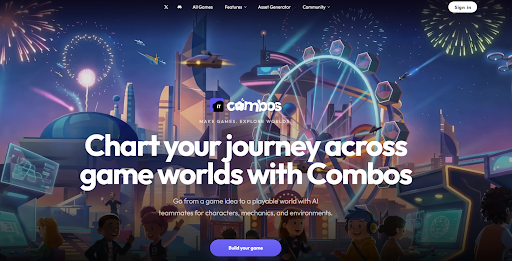
The tools available to indie developers have always lagged behind what large studios could access, but that gap has been narrowing for years. Affordable game engines came first. Free asset libraries followed. Online communities of independent creators created distributed knowledge that previously required institutional access. Each step expanded the range of what a small team could produce. The current step — making games using an AI Game Maker like Combos. Let’s check it in detail.
What Shifted in the Last Two Years to Make AI Tools Worth Taking Seriously
AI tools for game development existed before the current wave, but they were not yet reliable enough to be part of a serious creative workflow. Asset quality was inconsistent in ways that made integration into a real project difficult. Natural language interpretation was too literal — it handled obvious prompts adequately but fumbled nuanced creative direction entirely. The gap between AI output and genuinely usable game content was still too wide to close without manual work that eroded the time savings the tool was supposed to provide.
The shift in the last two years has been in the quality of what might be called the interpretation layer — the ability of systems like Combos to understand creative intent, respond to contextual direction, and produce output that reflects the specific vision of the creator rather than the average of all the training data. That shift is what has moved the current generation of AI game maker tools from interesting experiments to genuine workflow components.
The Democratisation Argument: Who Actually Benefits?
The democratisation argument for AI game tools — that lower barriers mean more diverse creators and more diverse games — is largely correct but benefits from specificity. Not everyone was equally excluded from game development by the technical barriers that previously existed. The exclusion was most concentrated among people who had creative ideas and design instincts but lacked either the technical background, the financial resources, or the time to acquire them.
These are the people who benefit most directly from an AI game maker. A teacher who wants to build educational games for their students. A writer who always imagined their stories as interactive experiences. A designer with strong visual instincts but no programming knowledge. A creator in a geography without a local game development community or accessible training. For all of these people, the barrier was not creative — it was logistical and technical. Removing that barrier does not make games for them; it makes it possible for them to make games themselves.
More Games, More Competition — What That Means for Quality
Lower barriers to entry inevitably produce more games. More games mean more competition for player attention in an already crowded market. This reality is worth acknowledging honestly rather than glossing over with optimism. Not all of the games produced as the creation barrier drops will be good. Some will be technically functional but creatively indistinct. The tools lower the floor; they do not automatically raise it.
What they do raise is the ceiling for what is possible without institutional resources. And historically, in creative media where access has expanded, the ceiling has risen. The most original and significant work tends to come from the newly included voices rather than from the established ones. The indie gaming space in 2026 will produce more mediocre games than it did in 2020. It will also produce more genuinely distinctive ones.
The Creative Explosion Happening Right Now Under the Surface
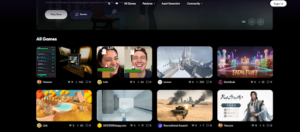
There is a wave of game creation happening right now that has not yet surfaced in mainstream gaming culture. Creators who were previously locked out by technical barriers are producing games on platforms like Combos and distributing them through personal networks, community platforms, and social media. The volume is significant and growing. The range of creative perspectives being expressed is genuinely broader than what traditional game development pathways have historically produced.
Most of these games will never be widely reviewed or commercially distributed in the traditional sense. That does not make them less significant. The cultural function of accessible creative tools is not only to produce the next breakout commercial hit — it is to give people the ability to make things and to develop the creative vocabulary that some of them will use to eventually make something exceptional.
Where Indie Gaming Goes From Here
The trajectory of AI game tools points in one direction: continued improvement in capability, continued reduction in the effort required from the creator to achieve a quality result, and continued expansion in the range of game types that can be meaningfully produced without technical development expertise. The competitive advantage for indie developers has never been in technical resources — it has always been in creative courage, personal vision, and the willingness to make games that large studios would not risk making.
As the technical floor rises for everyone, the games that break through will be the ones with something distinctive to say and the design craft to say it clearly. That is not a threat to indie gaming’s identity. It is a return to what has always defined it.
Conclusion
The rise of the AI game maker is changing the resource equation for independent game development in ways that matter. Combos and tools like it are not replacing the craft that makes indie games worth playing. They are removing the technical obstacles that previously prevented the craft from being expressed by the full range of people who have it. The next wave of indie games will be built by people who have always had the ideas. Now they have the tools.