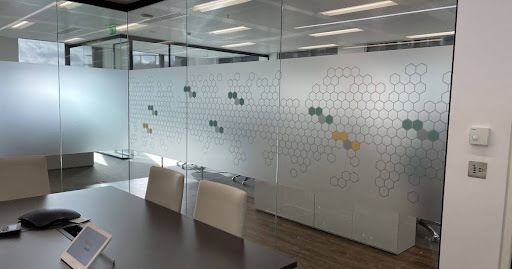
Clear glass doors are hard to see, and people walk into them more often than most offices expect. On a busy day, staff carrying coffee, reading a phone, or rushing between meetings can miss a closed door completely. The result is a bruised nose, a cut hand, or a cracked panel, and a safety issue the business should have caught earlier.
Patterned film is one of the simplest ways to fix this. It makes glass easy to see, helps the space meet building rules, and still looks like part of the interior design. A few careful choices at the planning stage turn a basic safety requirement into a feature that suits your brand.
How Glass Film Patterns Make Office Doors Safer
Keep these points in mind when choosing film for your office glass doors:
1. Make Clear Glass Visible at a Glance
The main job of any door marking is to tell people that a solid surface is in front of them. Plain glass gives the eye very little to focus on, so it’s easy to misjudge where the door ends and open space begins. A patterned window film breaks up that clear surface and gives the eye something to catch on from several metres away.
Dots, stripes, geometric shapes, or repeated logo icons all work well. The pattern needs enough contrast against the background behind it, so a light design suits a dark corridor and a darker tone suits a bright, sunlit wall. Test a sample on the door before ordering the full run.
2. Place Markings at the Right Heights
In the UK, Approved Document K sets out where glazing should be marked in areas where people could walk into it. Manifestation is usually needed in two bands, one between 850mm and 1000mm from the floor and another between 1400mm and 1600mm. This covers adults walking upright as well as children and wheelchair users.
Window film lines are a neat way to meet both height bands without covering the whole door. Two horizontal strips with a cut-out pattern or a subtle brand motif satisfy the rules and keep the door mostly clear. Confirm the exact measurements with your fit-out contractor or building manager before the artwork goes to print.
3. Mark Door Edges and Swing Zones
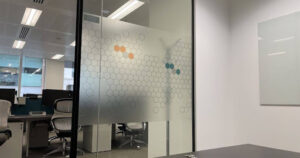
Fully glazed doors with no frame are the hardest to spot, and the edges are where most collisions happen. People often see the fixed panel beside a door but miss the moving leaf, or they don’t realise how far the door swings out.
A glass film pattern that runs along the vertical edge or frames the handle area helps people read where the door is and how it moves. You can also add a small “push” or “pull” label to the design. These details make the entrance safer for visitors who don’t know the building yet.
4. Cut Down Glare and Reflections
Glass can reflect strong light from windows, overhead lighting, or screens, which makes doors even harder to see at certain times of day. A reflection can make a closed door look like an open corridor.
Frosted and etched-effect films soften that glare and give the glass a visible texture. Even a light pattern changes how the surface catches the light, so the door stays easy to spot from morning to late afternoon. This matters most on doors that face large windows or bright atriums.
5. Guide People Through the Space
Patterned film can do more than prevent bumps. It can also help staff and visitors understand the layout of the office without extra signs on every wall.
Useful additions to glass door film include:
- Room names or numbers within the pattern
- Department names on entry doors
- Arrows or icons pointing to reception
- Fire exit markings where required
- Logos on the main entrance glass
Combining these with the safety markings keeps the glass tidy and avoids a cluttered mix of separate stickers.
6. Pair Decorative Film with Safety Film
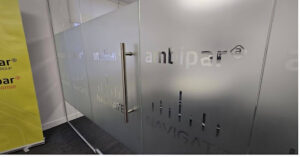
Patterned film makes glass visible, but it isn’t designed to hold the glass together if it breaks. For older doors or glass that doesn’t meet current safety standards, a clear safety film applied to the back can hold shards in place on impact.
Many offices use both: a safety-rated film for protection and a decorative pattern on top for visibility. Ask your supplier which films are rated for impact and which are purely visual, so you know exactly what each layer is doing.
Planning Safer Glass Doors for Your Office
Glass doors don’t have to be a hazard. The right film pattern makes them visible, meets building requirements, and adds character to the space in one step. It also saves the cost and disruption of fixing problems after staff have already moved in. Start with a walk around the office and note every glass door, side panel, and partition people pass through.
Check the heights against Approved Document K, look closely at how light hits each surface, and think about who uses the space each day. Then work with a supplier who can match the safety rules to your brand, so the finished doors look deliberate rather than patched up.