Why Architecture and Interior Design Firms Are Using AI Video to Present Concepts

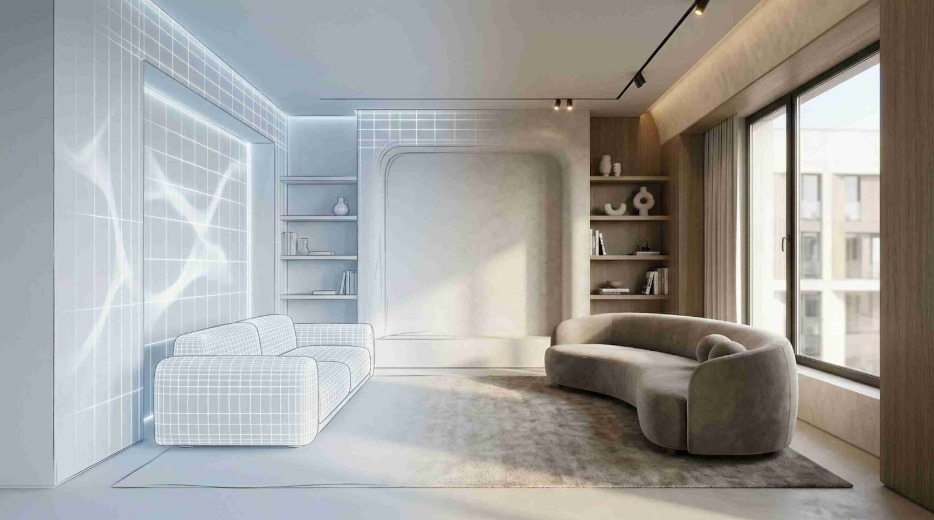
Architecture and interior design are deeply visual professions, yet the way most concepts are presented still relies on formats that many clients find hard to read. Floor plans, sections, elevations, static renders and mood boards are essential tools for designers, but for a homeowner, a restaurant owner or a property developer, they often fail to answer the most important question: what will it actually feel like to be in this space?
That gap is why more firms are turning to AI-generated video. Short, cinematic clips that show light moving across a room, a camera gliding from the entrance into a living area or a café filling with morning sunlight can communicate a design idea in seconds. Tools that once required specialized rendering software and animation teams are now accessible from a browser.
The Communication Challenge in Design Projects
Designers think spatially. Clients usually don’t. Common difficulties include:
- Reading technical drawings and understanding what lines and symbols represent
- Judging scale, ceiling height and how large a room will really feel
- Imagining how people will move from one space to another
- Picturing materials, textures and how they change under different light
When clients can’t visualize a concept, they hesitate, request more revisions or approve a design they don’t fully understand, which leads to disappointment later. Clear communication isn’t just a nice extra; it directly affects timelines, budgets and client satisfaction.
Why Video Is Becoming the Preferred Presentation Format
Video shows what still images can’t: movement, atmosphere and change over time. A short clip can reveal how afternoon light falls across a kitchen island, how a hallway opens into a double-height living room or how a hotel lobby feels as guests arrive. Video communicates mood and flow intuitively, so clients understand the design emotionally as well as technically.
How AI Video Generators Are Changing Design Workflows
Traditional architectural walkthroughs usually require detailed 3D models, specialized rendering software, long processing times and, often, a dedicated visualization team. That makes video presentations expensive, especially in the early concept phase when ideas are still changing.
With an AI Video Generator like the one on Animx, designers can transform renders, sketches and mood images into short motion clips in minutes. Animx brings several leading models into one workspace, including Veo 3.1 for photoreal cinematic scenes, Kling 3.0 for natural real-world motion, Seedance for smooth camera movement and consistent style, and Sora 2 for multi-shot sequences. Designers can upload an existing render as the starting frame and describe the camera movement, or describe a scene from scratch for early mood exploration.
1. Turning Static Designs Into Immersive Experiences
A single interior render can become a slow camera push into the room, a gentle pan across a terrace or a time-lapse of daylight moving across a facade. Image-to-video keeps the original design as the first frame, so the motion builds on work the client has already seen.
2. Improving Client Understanding and Confidence
When clients see a space in motion, they understand proportions, flow and atmosphere much more quickly. Clearer understanding leads to more confident decisions and fewer surprises later in the project.
3. Reducing Revision Cycles
Misunderstandings are a major cause of revisions. A short clip that shows how a kitchen connects to a dining area, or how a bedroom feels with warm evening lighting, can answer questions before they become change requests.
4. Enhancing Design Storytelling
Great projects have a story: a home built around family gatherings, a boutique hotel inspired by local craft, an office designed for focus and calm. AI video helps designers present that story with mood, light and movement rather than relying only on technical explanations. Models with native audio, such as Veo 3.1 and Sora 2, can even add ambient sound, like soft rain outside a reading nook or the quiet buzz of a café.
5. Saving Time in Presentation Creation
Instead of waiting days for a full animated walkthrough, designers can generate several short clips in a single session. Most clips render in roughly 30 seconds to two minutes, depending on the model and settings.
6. Scaling Presentations Across Projects
Firms working on many projects at once need a repeatable way to present concepts. Reference images help keep materials, furniture styles and color palettes consistent across a series of clips, and higher Animx plans allow several videos to render at the same time.
7. Improving Marketing and Client Acquisition
AI video isn’t only for client presentations. Short clips of concepts and completed projects work well on Instagram, LinkedIn, YouTube and firm websites. Vertical and widescreen formats make it easy to adapt the same idea for each platform and attract new clients.
8. Supporting Remote Client Collaboration
Many clients review designs remotely. A short video shared by link or email communicates far more than a PDF of drawings, making remote approvals smoother and faster.
9. Increasing Competitive Advantage
When competing for a project, a firm that presents its concept as an engaging, cinematic experience often stands out. Video shows clients that the team understands not just how a space is built, but how it will be lived in.
10. Aligning With Modern Content Expectations
Clients are used to high-quality video in every part of their digital lives. Presenting concepts in the same format meets those expectations and makes design proposals feel current and professional.
The Strategic Shift in Design Communication
Design communication is moving from purely technical documentation toward experience-led presentation. Drawings and specifications remain essential for construction, but early conversations increasingly focus on atmosphere, emotion and lifestyle. AI video bridges these two worlds: it translates technical design work into something clients can feel.
Challenges to Consider
AI video is powerful, but it must be used responsibly:
- Accuracy: AI-generated motion may subtly change proportions, materials or details. Always review clips carefully against the actual design.
- Expectations: Overly idealized visuals can set unrealistic expectations. Present clips clearly as concept visualizations, not final, guaranteed results.
- Technical decisions: Construction details, dimensions and specifications should always come from proper drawings and documentation, not from AI-generated imagery.
Used this way, AI video enhances communication rather than replacing professional design documentation.
The Future of Design Presentations
Design presentations are moving toward faster, more personalized and more immersive experiences. As AI video models improve in consistency, length and control, firms will be able to create tailored visual stories for every client and every stage of a project, from the first concept to the final reveal.
Conclusion
Architecture and interior design firms are adopting AI video because it solves a long-standing problem: helping clients see and feel a design before it becomes reality. By turning renders and sketches into short, cinematic clips, firms can simplify complex concepts, build client confidence, reduce revisions and present their work more persuasively. With several leading video models in one browser workspace and free credits to start, Animx makes it easy for design teams to explore this new way of presenting ideas.