Choosing the Right Kubota Equipment: A Practical Guide for Agricultural Buyers

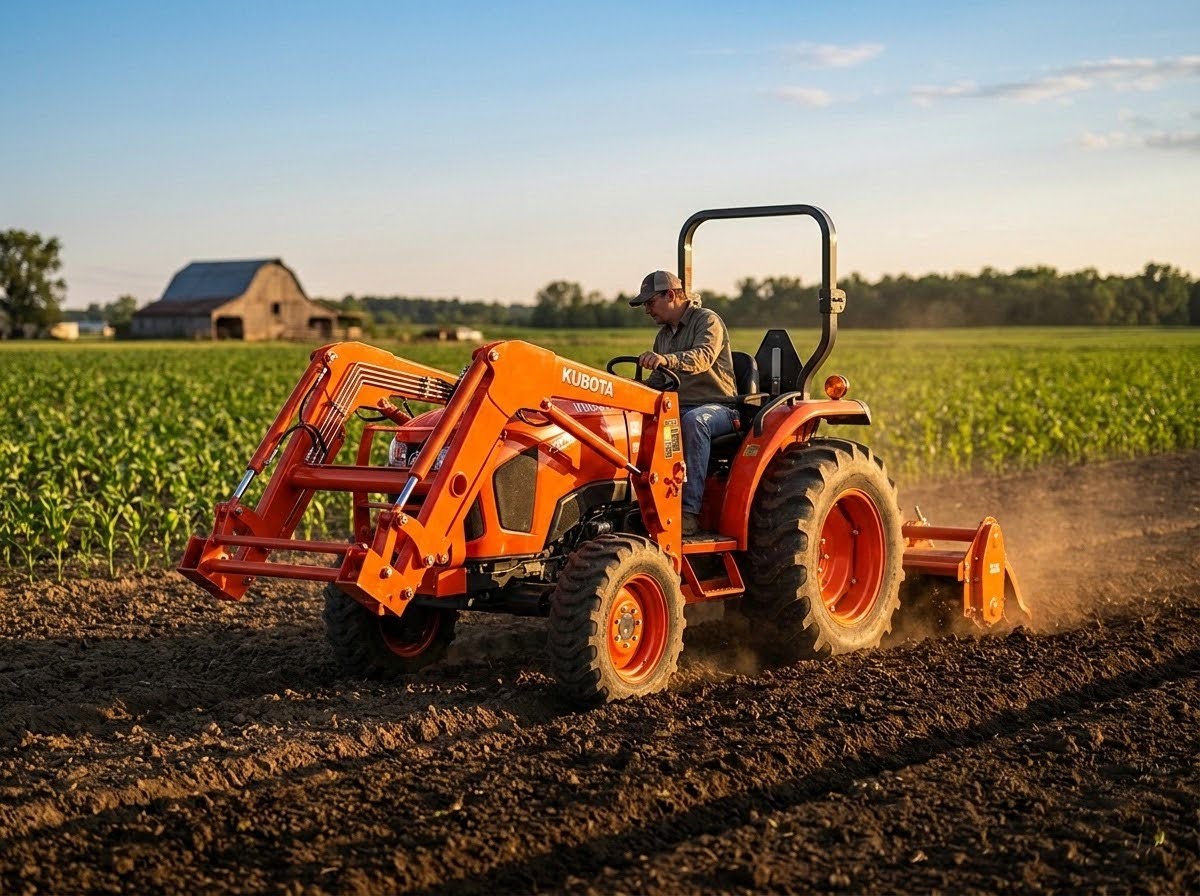
Machinery decisions have a long tail. The tractor you bring home this season will still be shaping your workdays five, ten, sometimes twenty years from now — how quickly you can turn a field, how much you can lift without a second pass, how many hours you lose to a part that has to be ordered from three states away. Kubota has built its reputation on compact and utility machines that hold up under exactly that kind of scrutiny, but the badge on the hood only gets you so far. The real work is matching a specific machine to a specific operation.
This guide walks through how to do that — starting with the questions worth asking before you ever set foot on a dealer lot.
Start With the Work, Not the Machine
The most common mistake buyers make is shopping by model number. It feels productive, but it inverts the process. A spec sheet can only tell you what a machine does; it can’t tell you whether that’s what you need done.
Instead, take an inventory of your actual tasks. Not the ones you imagine doing someday — the ones that fill your calendar now. How many acres do you mow, and how often? Are you moving round bales or square? Do you run a rotary cutter, a post-hole digger, a box blade, or all three? Is your ground level and dry, or sloped, wet, and rocky? Do you need to fit through a barn door or under a low branch line?
Write it down. That list becomes your specification, and everything that follows is just a matter of finding the machine that satisfies it without a lot of expensive surplus.
Sizing the Machine Correctly
Horsepower gets most of the attention, and it matters — but it’s rarely the constraint that bites first.
Weight and traction determine what a tractor can actually pull and how safely it handles a loaded bucket. A light machine with impressive engine numbers will spin its tires long before it runs out of power. Ballast, tire choice, and four-wheel drive often do more for real-world capability than another ten horses.
Hydraulic flow and lift capacity decide whether a loader can pick up what you put in front of it and whether your implements will run at full speed. If you’re planning on a grapple, a hydraulic angle blade, or anything else that draws continuously, flow rate deserves as much attention as horsepower.
PTO horsepower — not engine horsepower — is the number that governs implements. A rotary cutter rated for 40 PTO horsepower needs a machine that delivers 40 at the shaft, not at the crank.
Physical footprint is the constraint people discover too late. Measure your gates, your barn aisle, your row spacing, and the tightest turn on your property before you commit.
Compact tractors generally suit properties under about fifty acres, mixed-chore operations, and anyone working in confined spaces. Utility-class machines earn their keep on larger acreage, in heavier tillage, and wherever sustained loader work is a daily reality. There’s meaningful overlap between the two, and the honest answer for many buyers sits right at the boundary.
Attachments Are Half the Purchase
A tractor is a power source. What it actually does depends on what you hang off it — which means the attachment ecosystem deserves real scrutiny before you buy.
Check that the three-point hitch category matches the implements you already own or plan to buy. Confirm whether the loader uses a quick-attach system and, if so, which standard. Ask what a front-end loader, mid-mount mower, or backhoe costs on that specific model, because attachment pricing varies far more between machines than buyers expect.
Many operations find that a well-chosen implement set delivers more added productivity than moving up a size class would have. Before you upgrade the tractor, ask whether the right attachment solves the problem instead.
Utility Vehicles and Support Equipment
Tractors dominate the conversation, but few operations run on tractors alone. Utility vehicles handle fence checks, tool hauling, livestock feeding, and the hundred short trips a day that would otherwise burn diesel and compact your ground under a much heavier machine. Clearing and transport equipment fills a similar gap — complementing field work rather than duplicating it.
When you map your fleet, look at where your hours actually go. Operations often discover that a modest utility vehicle removes more friction from the week than any single large-machine upgrade.
Comfort, Controls, and the Hours You’ll Spend
If you spend six hours in a seat, ergonomics stop being a luxury feature. Seat suspension, control layout, visibility over the hood and toward the loader pins, step-up height, noise levels, and whether the cab has usable climate control all compound over a season. Fatigue causes mistakes, and mistakes on machinery are expensive in ways that go well beyond repair bills.
Recent compact tractor releases have leaned heavily in this direction, with manufacturers prioritizing intuitive controls and operator comfort alongside raw output. It’s worth demoing more than one machine and paying attention to how you feel after twenty minutes, not just what the brochure claims.
Dealer Support and Parts Availability
The best machine on paper is the wrong machine if it sits idle waiting for a part during your narrowest working window. Before buying, ask specific questions: What’s the typical turnaround on common parts? Does the dealer offer field service, and what’s the radius? What are the service intervals, and can routine maintenance be done in your shop?
Proximity and responsiveness of dealer support are, for most operations, worth more than a marginal difference in features. Build that into your comparison deliberately rather than treating it as an afterthought.
Thinking in Fleets, Not Purchases
Individual equipment decisions are rarely isolated. Machines age out on staggered schedules, and a purchase made this year narrows or widens your options three years from now. Standardizing on compatible hitch categories and hydraulic couplers, keeping consistent maintenance records, and tracking hours across the fleet all make future decisions simpler and resale stronger.
It’s also worth planning the funding side of an acquisition with the same care you’d give the spec sheet. That’s a substantial topic in its own right, and Financing Kubota Equipment covers it in detail for buyers who want to go deeper.
Conclusion
Good equipment decisions come from clarity about your own operation more than from encyclopedic product knowledge. Define the work, size the machine to it honestly, treat attachments and dealer support as part of the purchase rather than accessories to it, and think one cycle ahead. Do that, and the machine you choose won’t just handle this season — it will still be the right call when you’re deciding what comes next.